 We hold these truths to be self-evident, that all men are created equal, that they are endowed by their Creator with certain unalienable Rights, that among these are Life, Liberty and the pursuit of Happiness.
 Lake Eugenie Land & Devel. v. BP, the latest in the “body of federal common law in this Circuit” about the Deepwater Horizon settlement, presents both a crisp summary of the mandate rule and a dramatic tale of piracy on the high seas.
Mandate rule. As to the mandate rule, the opinion succinctly summarizes its theoretical basis –
“The mandate rule is a subspecies of the law-of-the-case doctrine: When a court decides a question, it usually decides it once and for all ‘subsequent stages in the same case.’ This doctrine operates on a horizonal plane—constricting a later panel vis-à-vis an earlier panel of the same court. It also operates on a vertical plane—constricting a lower court vis-à-vis a higher court. The vertical variant is what we call the ‘mandate rule,’ and it’s the kind at issue here.”
(citations omitted), as well as the way to implement it: “The first step is figuring out what our mandate said. . . . The next question is whether the district court deviated from that mandate.” (citations omitted).
Piracy on the high seas. The opinion cites some 19th-Century authority about the foundations of the mandate rule; among them, Himley v. Rose, 9 U.S. (5 Cranch) 313 (1809), which involved a “decree . . . formerly rendered” about the restoration of cargo from the merchant ship Sarah. The earlier opinion, Rose v. Himley, 8 U.S. (4 Cranch) 241 (1808), presents an  amazing tale of a load of coffee, sent from the port of Santo Domingo by “brigands” during a slave revolt against the French government, which was then intercepted and seized by a French privateer and sold in Cuba.
 Texas Capital Bank sued Zeidman for the alleged breach of a guaranty obligation. The Bank moved for summary judgment; in response, one of Zeidman’s arguments was that the Bank’s claim was barred by quasi-estoppel. He testified that “the Bank orally agreed to accept a $500,000 payment in satisfaction of the Guaranty, Zeidman wired that amount to the Bank, the Bank accepted the payment, and it later demanded additional payment under the Guaranty.” The Bank countered that this defense was barred by the statute of frauds, and the Fifth Circuit agreed that “oral modification of the Guaranty appears to be prohibited by the text of the Guaranty and the statute of frauds . . . .” But the Court found the Bank’s position about the statute of frauds to be inapplicable “because it improperly recharacterizes Zeidman’s affirmative defense as a claim that the underlying Guaranty was modified.” Texas Capital Bank N.A. v. Zeidman, No. 18-1114 (June 27, 2019) (unpubl.)
 The Fifth Circuit revised its original opinion in SEC v. Arcturus Corp., reaching the same result (reversal of a summary judgment for the SEC about whether certain investment contracts were securities), while adding significant factual and legal detail about the sophistication of the relevant investors – the issue on which the Court found summary judgment to have been inappropriate. SEC v. Arcturus Corp. (revised), No. 17-10503.
 The Fifth Circuit’s unfortunate Erie guess in Priester v. JPMorgan Chase Bank, 708 F.3d 667 (5th Cir. 2013), about limitations for an action to quiet title on a home-equity lien, was later rejected by the Texas Supreme Court in Wood v. HSBC Bank USA, 505 S.W.3d 542 (Tex. 2016). Meanwhile, the Priesters’ problems with their lender continued. The Fifth Circuit declined to consider their motion for reconsideration under Fed. R. Civ. P. 60(b), noting a lengthy delay by the Priesters in bringing the motion, and observing: “If a ‘change in law’ automatically allowed the reopening of federal cases, then anytime the Supreme Court resolved a circuit split, the courts that had taken the view that did not prevail would have to reopen cases no matter how long ago the judgments issued. . . . [The Priesters] are worried that the earlier federal judgment against them may pose a res judicata problem. But res judicata is the ordinary result of a final judgment, not an extraordinary circumstance warranting relief from one.” Priester v. JP Morgan Chase, No. 18-40127 (re-released as published on July 1, 2019).
 The federal system’s more-forgiving approach, to what Texas state practice calls “the Casteel problem,” was on display in Young v. Board of Supervisors of Humphreys County, Mississippi. After a jury trial, Young won a judgment under § 1983 for depriving him of the use of several properties. Among other appeal points, “The Board takes issue with Jury Instruction 4, which told the jury that it could find the Board liable if it found, by a preponderance of the evidence, one of three things: (1) ‘The Board of Supervisors authorized a violation of Mr. Young’s property rights,’ (2) ‘Dickie Stevens had been given the authority by the Board to take the action he took with respect to Mr. Young’s property,’ or (3) ‘The Board ratified Dickie Stevens’ actions after the fact.'” The Fifth Circuit held that as to the second theory, “[e]ven assuming that the court erred in allowing the jury to determine whether Stevens was a policymaker, there was legally sufficient evidence for a reasonable jury to hold the Board liable on a ratification [the third] theory . . . Thus, ‘any injury resulting from the erroneous instruction is
harmless.’“ No. 18-60618 (June 21, 2019).
 Here is my PowerPoint from the recent appellate course sponsored by University of Texas CLE. I also discussed this month’s opinion in In re: City of Houston, granting mandamus relief in a privilege dispute.
 In In re City of Houston, the Fifth Circuit succinctly held: “Having reviewed the submissions of the parties, the documents in dispute, which are contained in Exhibit A to the City’s motion to seal documents, and pertinent jurisprudence, we conclude that the electronic communications identified by the City in Tabs 3, 4, 5, 8 and 9 of Exhibit A fall within the attorney-client privilege and that mandamus relief is warranted with respect to such items. See In re: Itron, Inc.,883 F.3d 553, 567–69 (5th Cir. 2018); EEOC v. BDO USA L.L.P., 876 F.3d 690, 695-97 (5th Cir. 2017); Exxon Mobil Corp. v. Hill, 751 F.3d 379, 382–83 (5th Cir. 2014); In re: Avantel, S.A., 343 F.3d 311, 316–17 (5th Cir. 2003).” No. 19-20377 (June 18, 2019, unpublished).
 In SEC v. Stanford Int’l Bank, Ltd., the Fifth Circuit reviewed an intricate, court-supervised settlement between the receiver for Stanford International Bank and several D&O carriers, and “conclude[d] the district court lacked authority to approve the Receiver’s settlement to the extent it (a) nullified the coinsureds’ claims to the policy proceeds without an alternative compensation scheme; (b) released claims the Estate did not possess; and (c) barred suits that could not result in judgments against proceeds of the Underwriters’ policies or other receivership assets.”
The Court observed: “By ignoring the distinction between Appellants’ contractual and extracontractual claims against Underwriters, the district court erred legally and abused its discretion in approving the bar orders. These claims . . . lie directly against the Underwriters and do not involve proceeds from the insurance policies or other receivership assets. . . . [R]eceivership courts have no authority to dismiss claims that are unrelated to the receivership estate. That the district court was ‘looking only to the fairness of the settlement as between the debtor and the settling claimant [and ignoring third-party rights] contravenes a basic notion of fairness.'” No. 17-10663 (June 17, 2019).
The Northern District of Texas sent this message today: “The Earle Cabell Federal Building and U.S. Courthouse located at 1100 Commerce Street, Dallas, TX, will be closed to the public tomorrow [June 18]. Initial criminal proceedings that are scheduled tomorrow before a magistrate judge will be held at the Fort Worth division located at 501 W. 10th Street, Fort Worth, TX. Other proceedings scheduled for tomorrow in Dallas will be rescheduled unless you have been specifically informed of alternative arrangements by a courtroom deputy or other court personnel. Updates to this information will be provided on our website at www.txnd.uscourts.gov.”
 After a 2011 amendment, the removal statute allowed a motion to remand based on diversity after a year if the “district court finds that the plaintiff has acted in bad faith in order to prevent a defendant from removing the action. 28 U.S.C. § 1441(c)(1). One of the removal-jurisdiction issues in Hoyt v. Lane Construction was the applicable legal standard to determine bad faith. The district court focused on the plaintiffs’ affidavits, which explained “why the Hoyts were reluctant to go to trial against Storm or accept Storm’s (apparently low) settlement offer,” but “do not explain why the Hoyts waited until just two days after the one-year deadline to dismiss Storm. On appeal, the plaintiffs argued for a standard based on equitable estoppel that had been developed in prior Fifth Circuit precedent, but the Court rejected those authorities as having been mooted by the 2011 amendment. No. 18-10289 (June 10, 2019).
 Several parties entered an “Area of Mutual Interest” (AMI) agreement, a common feature of oil-and-gas development projects. The AMI included various interests “which were or are acquired after” the agreement’s effective date, “by a Party” to the agreement. But it excluded “all interests, leases or agreements owned by a Party prior to the Effective Date.” Thus, when a party bought interests from another party after the effective date, that sale was not within the scope of the AMI. The Fifth Circuit observed: “If Appellees sought to prohibit the type of activity in which EnerQuest engaged, they could have easily done so through the contract.” Glassell Non-Operated Interests, Ltd. v. EnerQuest Oil & Gas, LLC, No. 18-20125 (June 12, 2019).
 Here is a copy of my PowerPoint from today’s presentation about business cases in the Dallas Court of Appeals during 2019. Thanks to all who came out, and to the DBA Appellate Section for the invitation!
 With yesterday’s nomination of Hon. Sul Ozerden (right), who presently serves as a District Judge for the Southern District of Mississippi, the Fifth Circuit is on the cusp of having a full roster of active judges.
 Today’s post on 600Commerce hearkens back to a case covered by this blog several years ago when, literally, the ship had sailed. (The 600Commerce post goes on to note that a similar principle applies in a dispute about the right of possession (in Texas practice, a forcible detainer action), which becomes moot when “a writ of possession had been served on appellant” and thus “appellant is no longer in possession of [the] premises.” Jones v. Willems, No. 05-18-01191-CV (June 7, 2019). Longtime 600Camp readers will be interested to know that the ship in question, since reflagged as the M/V CALHOUN, is in Singapore as of the date of this post, still well away from Fifth Circuit jurisdiction.
 AccentCare sent an arbitration agreement to Trammell’s home; “[t]he district court applied the ‘mailbox rule’ to presume that Trammell received the company’s proffered arbitration agreement even though she testified that she never received the contract and indicated to her employer that she was experiencing difficulties in receiving and sending mail.” This showing, especially given that AccentCare could not produce a signed agreement or otherwise rebut her claims about problems with mail, the Fifth Circuit reversed: “Because Trammell created a genuine issue of material fact regarding whether an arbitration agreement was formed, she is entitled to a jury trial under Section 4 of the FAA.” Trammell v. AccentCare, Inc., No 18-50872 (June 7, 2019, unpublished).
(The specific FAA provision, often referred to but rarely used, says: “. . . the party alleged to be in default may, except in cases of admiralty, on or before the return day of the notice of application, demand a jury trial of such issue, and upon such demand the court shall make an order referring the issue or issues to a jury in the manner provided by the Federal Rules of Civil Procedure, or may specially call a jury for that purpose”).
 Rural electric cooperatives, created pursuant to the New Deal’s Rural Electrification Act, and that “‘act under’ and the [Rural Utilities Service]’s direction
based on a close and detailed lending relationship and shared goal of furthering
affordable rural electricity,” sought to remove litigation about governance issues under the “federal officer” statute. The district court remanded but the Fifth Circuit reversed: “[I]t was error to conclude that the cooperatives have not presented a colorable federal defense, as required for federal officer removal jurisdiction. Again, this is not to say that the cooperatives will inevitably be successful in their preemption defense. Rather, our conclusion is a natural byproduct of the
fact that ‘one of the most important reasons for [federal officer] removal is to have the validity of the [federal defense] tried in a federal court.'” Butler v. Coast Elec. Power Assoc., No. 18-60365 (June 7, 2019).
 Ekhlassi sued National Lloyds in Texas state court for a flood-insurance claim, arising out of a “Write Your Own” insurance policy issued in the carrier’s name but underwritten by the federal government. His filing may have satisfied the one-year statute of limitations for such a claim – the
  parties disputed the trigger event – but his choice of a state forum proved fatal. The panel majority, applying Circuit precedent and authority from other Circuits, found that the grant of “original exclusive jurisdiction” in federal court by 28 U.S.C. § 4072 applied to his suit. A dissent argued that this statute, by its terms, applied only to a suit against FEMA’s Administrator and not a “WYO” carrier. Ekhlassi v. National Lloyds Ins. Co., No. 18-20228 (June 4, 2019).
 District courts frequently “administratively close” an inactive matter, but that housekeeping measure does not create an appealable order: ‘”A ‘final decision’ generally is one which ends the litigation on the merits and leaves nothing for the court to do but execute the judgment.” In contrast, “a district court order staying and administratively closing a case lacks the finality of an outright dismissal or closure.” By administratively closing the case, the district court retains jurisdiction, meaning it can “reopen the case—either on its own or at the request of a party—at any time.” “[R]eservation of jurisdiction for the purpose of hearing substantive claims . . . precludes appellate jurisdiction because an order framed this way is not a final judgment.”’ Sentry Select Ins. Co. v. Ruiz, No. 18-50605 (May 23, 2019) (unpubl.)
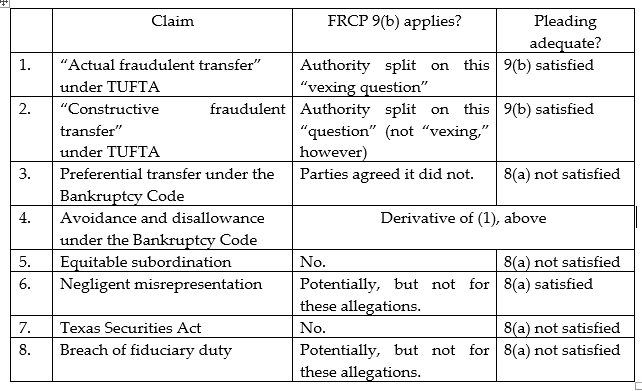
Life Partners’ Creditors’ Trust v. Cowley, No. 17-11477 (May 31, 2019), reviewed the dismissal of several highly-technical claims brought by a bankruptcy trustee about the sale of “viaticals” (investments in life insurance policies sold to third parties by the insureds). For each claim, the Fifth Circuit reviewed whether FRCP 9(b) or 8(a) applied, and then assessed the pleaded allegations, reaching these conclusions:
 Sometimes, simply stating the issue gives a strong indication as to the answer. Such was the case in McGlothlin v. State Farm, which examined whether two Mississippi statutes were “repugnant” to one another (synonyms for “repugnant,” according to one online reference, include “abhorrent, revolting, repulsive, repellent, disgusting, offensive, objectionable, vile, foul, nasty, [and] loathsome . . . .” Specifically, Mississippi’s uninsured-motorist statute (1) required State Farm to pay the damages that an insured is “legally entitled to recover” from an uninsured driver, and (2) treats a fireman driving a fire truck as “uninsured,” as a result of the statute’s governmental-immunity statute. A driver who was rear-ended by a fire truck argued that these two statutes were “repugnant” and had to be read in favor of coverage; the Fifth Circuit disagreed: “The two sections’ being ‘confusing’ does not equate to repugnancy.” No. 18-60338 (May 31, 2019).
 A recurring question in commercial arbitration is the amount of detail required for a “reasoned award’ – described generally as “something short of findings and conclusions but more than a simple result.” The Fifth Court provides a helpful example in YPF S.A. v. Apache Overseas, Inc., which quotes the relevant part of the arbitrator’s award and holds: “KPMG noted that it based its analysis on the parties’ statements and accounting records, pointed to its finding on the accrual of liabilities, and explained what documentation it found relevant in evaluating the proper refund amount.” No. 17-20802 (May 24, 2019).
 The Texas Uniform Fraudulent Transfer Act provides a potential defense to a party who receives an otherwise-fraudulent transfer in “good faith.” That said, the exact contours of that defense are not completely clear, leading the Fifth Circuit to vacate an earlier panel opinion on the issue, to now certify this question to the Texas Supreme Court:
“Is the Texas Uniform Fraudulent Transfer Act’s ‘good faith’ defense against fraudulent transfer clawbacks, as codified at Tex. Bus. & Com. Code § 24.009(a), available to a transferee who had inquiry notice of the fraudulent behavior, did not conduct a diligent inquiry, but who would not have been reasonably able to discover that fraudulent activity through diligent inquiry”
Janvey v. GMAG, LLC, No. 17-11526 (May 24, 2019).
 A remarkably long-lived case about the collapse of Enron came to an end in Lampkin v. UBS Fin. Servs., Inc.: “[Plaintiffs[‘] Securities Act claims fail because their participation in the Employee Stock Option Plan was compulsory and employees furnished no value, or tangible and definable consideration in exchange for the option grants. The Court in [Int’ Brotherhood of Teamsters v. Daniel, 439 U.S. 551 (1979)] rejected the idea that the exchange of labor was sufficient consideration in the context of a compulsory, non-contributory pension plan—the same logic applies to the option plan at issue here. Plaintiffs made no investment decision in the grant of the options, the Enron plans were compulsory and non-contributory. The fact that plaintiffs would eventually make an affirmative investment decision—whether to exercise the option or let it expire—at some point in the future is of no consequence. Plaintiffs’ claims are based explicitly on the grant of the option, not the exercise of that option.” No. 17-20608 (May 24, 2019) (emphasis added).
 Valderas, the plaintiff in an excessive-force case, opposed the defendant’s motion to strike with a single argument – that the defendant had failed to satisfy the conference requirement of N.D. Tex. Local Rule 7.1. The district court disagreed, as did the Fifth Circuit: “Valderas cites to only one decision explicating the meaning of the local rule in question and implies that the decision establishes that a telephone conversation is necessary to satisfy the conference requirement. The decision explicitly notes, however, that the conference requirement can be met through a written conferral.” Valderas v. City of Lubbock , No. 18-11023 (May 21, 2019) (unpublished) (emphasis added) (applying Dondi Props. Corp. v. Commerce Sav. & Loan Ass’n, 121 F.R.D. 284, 290 (N.D. Tex. 1988) (en banc) (per curiam)).
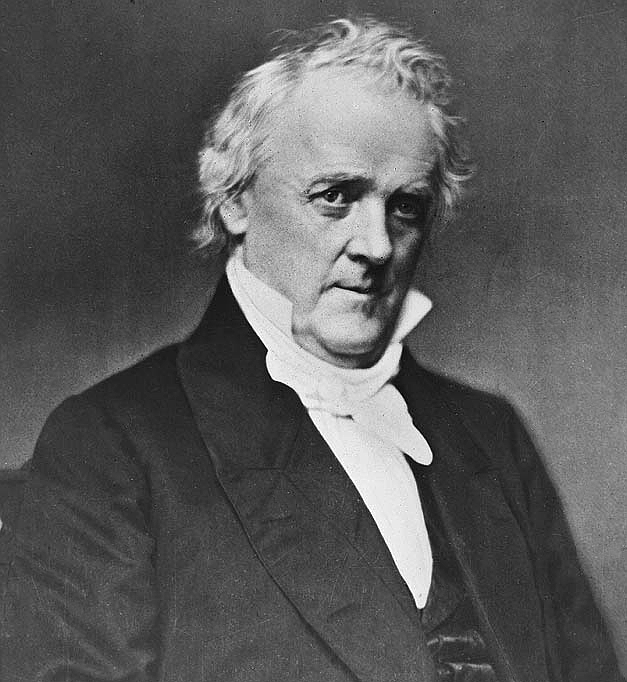 Yesterday’s District of the District of Columbia opinion about the Congressional subpoena to Mazars (President Trump’s accounting firm), offers a fascinating summary of the history of legislative-executive friction about similar subpoenas, including the complaints of the rarely-quoted President Buchanan. In an echo of McCulloch v. Maryland about the broad scope of Congress’s power to legislate, this opinion describes a similarly-broad scope of the power to investigate before legislating.
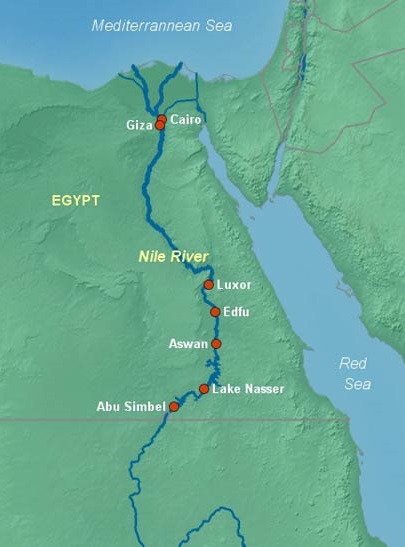 Cohen argued, inter alia, that a letter from Allstate “merely denied ‘coverage for various items'” and thus lacked adequate specificity to effectively deny his flood-insurance claim (and thus start a 1-year federal statute of limitations). The Fifth Circuit disagreed, observing that “not even the temptations of a hard case will provide a basis for ordering recovery contrary to the terms of [a] regulation, for to do so would disregard the duty of all courts to observe the conditions defined by Congress for charging the public treasury.” Cohen v. Allstate Ins. Co., No. 18-20330 (May 17, 2019) (citation omitted).
 Lopez v. Pompeo addressed an infrequent but fundamental issue of res judicata: “When this court affirms a judgment of the district court, but on different grounds than those adopted by the district court, it is the decision of this court, not the district court, that has preclusive effect . . . ‘[O]nce an appellate court has affirmed on one ground and passed over another, preclusion does not attach to the ground omitted from its decision.'” No. 18-40175 (May 14, 2019).
On the topic of personal jurisdiction, recent Supreme Court cases emphasize that “[i]t is the defendant, not the plaintiff or third parties, who must create contacts with the forum State..” Walden v. Fiore, 571 U.S. 277 (2014). An interesting test of that principle arose in Carmona v. Leo Ship Management, No. 18-20248 (May 10, 2019), in which a stevedore sued for injuries  incurred in Houston while unloading pipe from a globe-circling freighter. He sued LSM, the company that by contract operated the M/V Komatsushima Star (right) (since, renamed the M/V Kacey, and moored in the Yellow Sea as of this post). LSM did not own the ship “and could not direct where it traveled, what it carried, or for whom it worked,” and thus tried to invoke Walden and related cases about jurisdiction arising from a “mere fortuity.”
The Fifth Circuit observed:
- “[A] defendant’s contacts with a forum and the purposefulness of those contacts are distinct–though often overlapping –inquiries. Although tortious conduct within a forum ensures the existence of contacts it does not always guarantee that such contacts were deliberate.” (citation omitted);
- “Especially considering that the contract was freely terminable with two months’ notice, LSM was hardly compelled to travel to Texas against its will. Rather, it made a deliberate choice to keep its employees aboard a ship bound for Texas” and thus “purposely availed itself” of the Texas forum;
- But as to one of Carmona’s claims: “LSM presented undisputed evidence that a third party had stowed the pipes aboard the ship while it was outside the United States,” thus establishing that “the claim that the pipes were improperly stowed does not stem from LSM’s activities in Texas.”
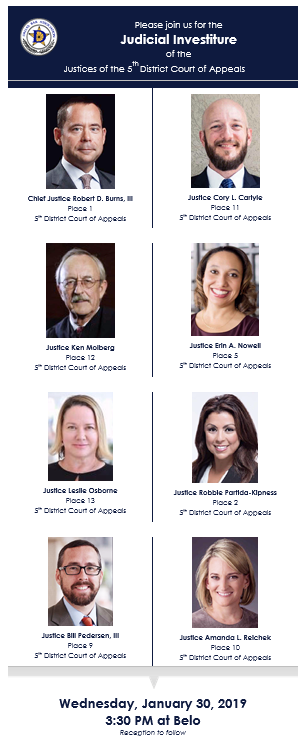
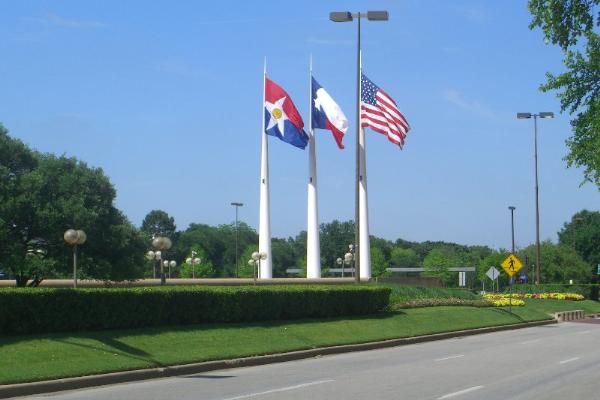 On May 16 at the Belo Mansion, the DBA Appellate Section presents a panel discussion among the eight newly-elected Justices of the Fifth Court of Appeals (a/k/a, the “Slate of Eight“), moderated by Justice Lana Myers, a 20-year veteran of the Fifth Court.. The Section’s announcement of the program goes on to say: “If you have a question you would like the panel to answer, please send it to DBAAppellateChair@gmail.com. The panel will try to answer pre-submitted questions during the presentation as time permits.”
 The relator in Lemon v. Nurses to Go., Inc. alleged violations of the False Claims Act about several aspects of the defendants’ hospice-care services. Applying Universal Health Services v. United States ex rel. Escobar, 136 S.Ct. 1989 (2016), the Fifth Circuit reversed the district court’s finding that the issues were immaterial, finding that they (1) related to conditions of payment; (2) the government would have enforced those conditions had it known of the problems identified by relators; and (3 the issues were not “minor or insubstantial.” No. 18-20326 (May 7, 2019).
 In the category of “not very surprising en banc votes”: After a plea for en banc review in a recent case about federal jurisdiction over injury claims arising from asbestos exposure at the Avondale Shipyard (in its heyday, the largest employer in Louisiana), the Fifth Circuit has accepted that case for en banc review. Latiolas v. Huntington-Ingalls, No. 18-30652 (May 8, 2019). (To the right, the launch at Avondale of a Knox-class frigate, an unheralded but stalwart antisubmarine-warfare vessel of the late Cold War.)
 A multi-million dollar judgment, in favor of a bankruptcy trustee suing for the estate, foundered on two problems about party identity:
- Injury? The estate (LSI) had no standing to seek damages about a substantial debt incurred to an alleged insider (Jabil), because: “[T]he millions of dollars awarded under Damage Element No. 1 represent Jabil’s injury, not LSI’s. Jabil manufactured and delivered the contractually agreed upon equipment to LSI. LSI benefitted from the equipment, and Ebert even leased and sold the equipment in Chapter 11 proceedings. Moreover, LSI did not pay the invoices on the equipment. Therefore, LSI benefitted and even had cash available for other needs.” (emphasis in original)
- Benefit? Stock sales involving affiliated entities did not established a personal benefit to alleged insiders (Apfel and Bartlett): “[E]bert tacitly admits that she provided evidence only for the nominee companies’ gains, not for Appel and Bartlett in their individual capacity. Manz’s calculations were based primarily on two documents: Schedule 7.B, which showed market sales of LSI stock, and a list of nominee companies with how many shares of LSI each owned as of September 9, 2011. Yet these documents only list companies and provide no proof of or insight into Appel and Bartlett as individuals.”
Ebert v. DeJoria, No 18-10382 (April 30, 2019).
 While “[t]he Texas Supreme Court has not had occasion to determine whether a contract that is unsigned but otherwise enforceable may incorporate an unsigned document by reference,” that was the issue presented in Int’l Corrugated & Packing Supplies, Inc. v. Lear Corp. But in the context of an interlocutory appeal from denial of a motion to compel arbitration, the Fifth Circuit “declined[d] to resolve this novel question of Texas law here because the district court has not yet ruled on the enforceability of Lear’s purchase orders. Specifically, . . . how the parties entered the agreements at issue in this case—either through purchase orders, or phone calls or emails prior to the sending of purchase orders, or some other conduct—nor has it determined what effect, if any, the parties’ course of dealing has on such agreements [under the UCC].” No. 18-50167 (May 3, 2019) (unpublished).
 “[Mister Mudbug, Inc.] asserts that it relied on [Bloomin’ Brands, Inc.]’s representation that ‘MMI would have to substantially enlarge its production and manufacturing facilities’ if it wanted ‘to produce all of the food products that BBI would need in its nationwide restaurant operations.’ The district court held that this representation is a factual declaration, not a promise. We agree. It is not an assurance that BBI would award MMI larger contracts if it did expand; it is a statement informing MMI of the preconditions necessary to be in the running for a larger contract.” Mr. Mudbug, Inc. v. Bloomin’ Brands, Inc., No. 18-30626 (May 1, 2019) (unpublished) (emphasis added).
 Reed, whose sole income came from Social Security benefits, and who was subject to a Texas law requiring him to pay for GPS monitoring, contended that the law violated section 407(a) of the Social Security Act, which protects benefits from “execution, levy, attachment, garnishment, or other legal process.” (emphasis added).
To resolve Reed’s argument, the Fifth Circuit first summarized the general importance of statutory-construction canons, even in a focus on “plain meaning”: “Statutory language, like all language, is suffused with age-old interpretive conventions. And judges, like all readers, must be attentive not to words standing alone but to surrounding structure and other contextual cues that illuminate meaning.”
The Court then applied the concept of ejusdem generis: “‘Where general words follow specific words in a statutory enumeration, the general words are construed to embrace only objects similar in nature to those objects enumerated by the preceding specific words.’ Section 407(a) follows this familiar semantic structure, meaning the follow-on
phrase ‘other legal process’ is limited to processes like “execution, levy, attachment, [or] garnishment.” Common phrasing; common-sense meaning.” Reed v. Taylor, No. 17-20519 (May 2, 2019).
Celebrate the Cinco de Mayo with 5 key Dallas court of appeals cases from 2019!
 A significantly limited new version of the TCPA has passed the Texas House; a similar version is still pending in the Senate. The bill addresses several aspects of the statute’s application in business cases. While the lingering Erie issue about the TCPA’s application in federal court remains, the issue will have less ongoing significance if the Legislature reduces this statute’s force in commercial litigation.
 While finding a “clear record of delay or contumacious conduct,” sufficient to justify dismissal with prejudice in a Deepwater Horizon case, as to one set of appellants in Graham v. BP Exploration, the Fifth Circuit declined to do so as to the other group: “Confused about whether their three existing complaints were ‘individual lawsuits’ under [Pretrial Order] 63, the D’Amico Appellants queried the [Plaintiffs’ Steering Committee] and were advised only to file sworn statements. This was a mistake, as the D’Amico Appellants concede. But based on this flawed understanding of PTO 63, the D’Amico Appellants then timely filed and served sworn statements before the April 12, 2017 deadline. None of this makes those filings any less mistaken under PTO 63, but it does show an absence of willful conduct. And BP points to nothing in the record to dispel that impression. There is a critical difference between trying but failing, on the one hand, and simply not trying, on the other.” No. 18-30008 (Apr. 29, 2019) (emphasis added).
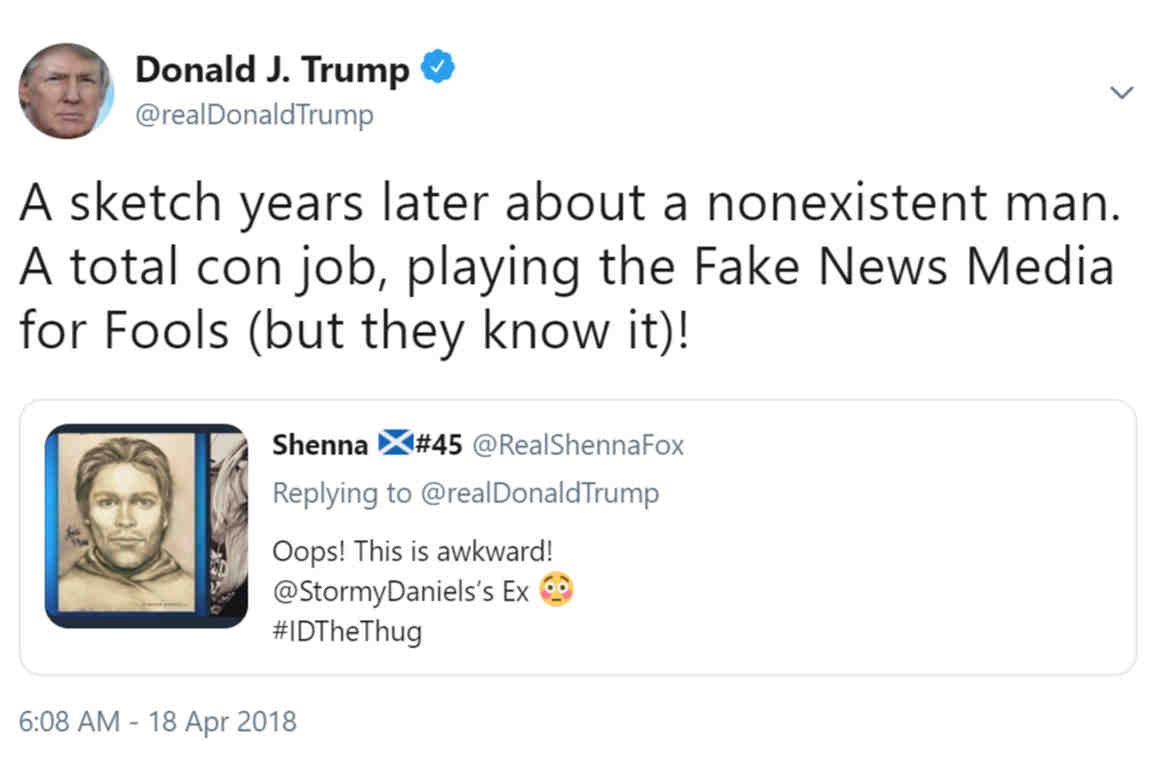 The Texas anti-SLAPP statute has generated an enormous amount of litigation and commentary, especially with the Legislature in session and actively considering amendments. Interestingly, one of the most successful defendants to invoke this statute is President Trump, who used it last year in California federal court to obtain dismissal of a defamation claim about the above Tweet, as well as a substantial award of attorneys’ fees. The district court’s opinion is interesting reading on the merits, as well on choice-of-law and the Ninth Circuit’s treatment of the underlying Erie issue.
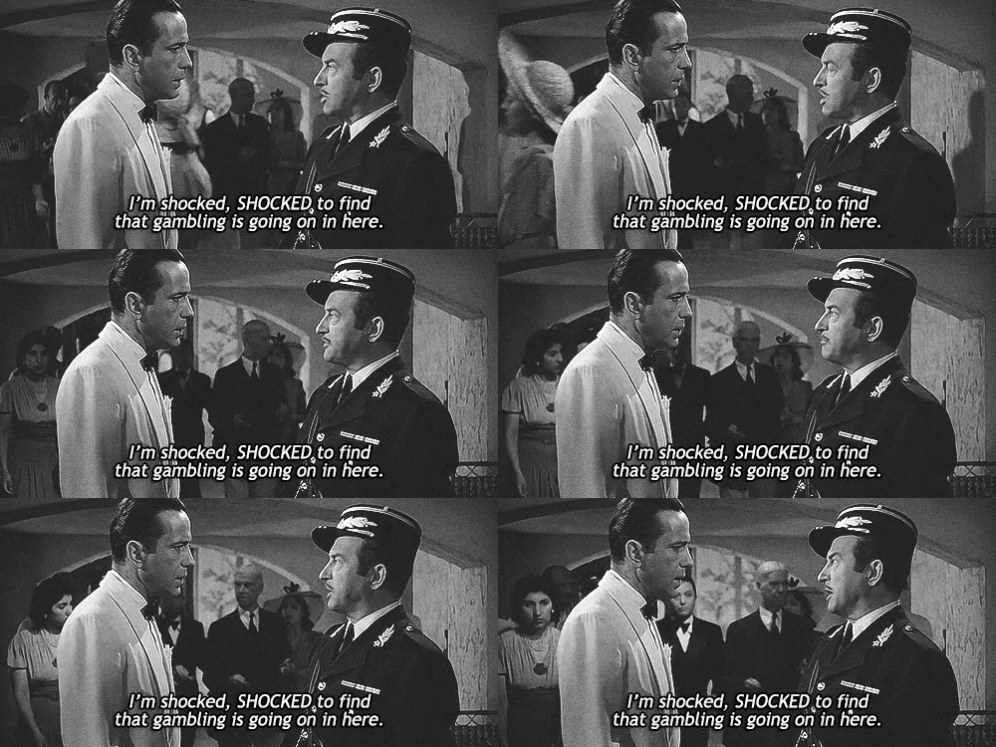 An arbitration panel, organized under the rules of the Houston Bar Association, awarded a substantial sum to an attorney in a fee dispute with his former client. The client sought vacatur on the ground that it not know the non-attorney member of the panel worked for a large law firm (to paraphrase Claude Rains’s character in Casablanca, it was shocked, SHOCKED to make this discovery). The Fifth Circuit found this argument waived, and did not accept the client’s argument that waiver should be limited to vacatur based on conflicts of interest: “We therefore conclude that Light-Age waived its objection to Davis’s participation on the panel. Light-Age had constructive knowledge that Davis worked for a law firm at the time of the arbitration hearing; it could have discovered that Jackson Walker was a law firm simply by clicking on the link provided in Davis’s email signature or running a brief internet search. It is reasonable to expect even a pro se litigant to perform such basic research into its arbitrator.” Ashcroft-Smith v. Light-Age, Inc., No. 18-20098 (April 25, 2019) (emphasis added).
 Counterclaims that “revolve around the parties’ compliance with the same settlement agreement” are compulsory under Fed. R. Civ. P. 13(a): “[B]oth regard the same instruments and transactions, and a jury would hear substantially the same facts in regard to both.” RPV, Ltd. v. Netsphere, Inc., No. 18-10462 (April 23, 2019) (unpublished) (citation omitted).
 Hira, a guarantor, argued that the lender’s calculation of the amount due should not have been accepted as a basis for summary judgment against her. The Fifth Circuit disagreed:
Hira never proposed her own calculations, a step she was required to take by Texas law and the district court’s summary judgment order. RBC Real Estate Fin. v. Partners Land Dev., Ltd.543 F. App’x 477, 480 (5th Cir. 2013) (per curiam) (unpublished) (upholding a grant of summary judgment because the appellants “did not provide any controverting summary judgment evidence to the district court”); 8920 Corp. v. Alief Alamo Bank, 722 S.W.2d 718, 720 (Tex. App.—Houston [14th Dist.] 1986, writ ref’d n.r.e.) (granting a motion for summary judgement because the appellants “presented no controverting affidavits that could raise a fact issue as to appellee’s method of computation and the accuracy of its figures.”). Without providing a competing calculation, Hira failed to raise a genuine issue of material fact.
Pacific Premier Bank v. Hira, No. 18-10611 (April 15, 2019, unpublished).
In a forum dispute arising from an oil-rig explosion, the Fifth Circuit rejected four arguments for personal jurisdiction in Texas over one of the parties, arising from that party’s litigation activity:
- Counterclaiming. “[A] non-resident defendant may participate in litigation without submitting to the court’s jurisdiction so long as it maintains its objection to personal jurisdiction. Relatedly, this court has also held that filing a counterclaim or ‘third-party claim does not, without more, waive an objection to personal jurisdiction.'” (citation and footnote omitted);
- Moving to compel arbitration. “Ironshore submitted to the court’s jurisdiction for the sole purpose of compelling arbitration. By submitting to the court’s power for this limited purpose and maintaining its personal jurisdiction motion to dismiss, Ironshore continued to object to ‘the power of the court’ and did not waive its personal jurisdiction defense.”
- Demand letters. “Many other circuits have addressed similar scenarios in which a potential plaintiff sends a cease-and-desist letter threatening litigation to a potential defendant. None of these courts held that sending a letter amounts to
purposeful availment.” - Settlement agreement with Texas forum clause. “There are no allegations of suit-related contact between Ironshore and Texas other than Ironshore’s
participation as a defendant in litigation and the forum-selection clause in the
settlement agreement . . . .”
Halliburton Energy Services, Inc. v. Ironshore Specialty Ins. Co., No. 17-20678 (April 17, 2019).
 Texas’s robust attorney-immunity doctrine defeated claims about the Allen Stanford scheme in Troice v. Greenberg Traurig LLP., No. 17-11464 (April 17, 2019). The Fifth Circuit declined to certify the state-law issue, citing “the substantial treatment of the issues by the Texas courts of appeals and the ‘cogent and sound arguments’ presented by counsel,” and held:
- “We are persuaded the Supreme Court of Texas would apply the attorney immunity doctrine in the non-litigation context”;
- “[I]mmunity can apply even to criminal acts so long as the attorney was acting within the scope of representation” (noting that “[a]fter arguing there was a categorical bar to applying immunity in this context, the plaintiffs did not make an alternative argument that immunity does not apply because Greenberg’s acts were outside the scope of client representation”; and
- “We conclude that the Supreme Court of Texas would not consider itself sure that the Texas Legislature intended to abrogate attorney immunity in the context of [Texas Securities Act] claims.” (emphasis in original).
 A state prison, whose officers were sued for allegedly using excessive force, made video recordings of encounters with prisoners to defend against such claims. Unfortunately for the prison, in Bourne v. Gunnels the prisoner “had turned out the lights in the cell” and one of the defendants “stood in the doorway to the cell for most of the use of force,” meaning that from the video, “it is impossible to tell what occurred during the use of force.” This failure of proof led to reversal of summary judgment for the defendants. No. 17-20418 (April 16, 2019).
 “In their Fourth Amended Complaint, the Bowmans make claims under the [Texas Debt Collection Act] without citing the appropriate sections of the statute for each claim. CitiMortgage raised this issue, and the Bowmans responded that they provided enough information for CitiMortgage to figure out which provisions it violated. As the district court reasoned, this is insufficient to provide fair notice to the defendant under Federal Rule of Civil Procedure 8(a).” Bowman v. CitiMortgage, No. 18-10867 (April 12, 2019) (unpublished).
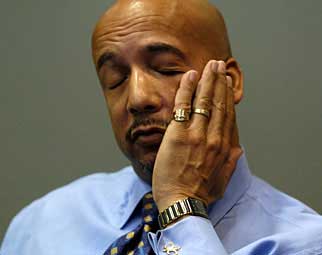 The panel majority in Waste Management, Inc. v. River Birch, Inc.reversed a defense summary judgment in a civil RICO case, on the question whether an alleged bribe was the cause of an action by the disgraced former mayor Ray Nagin. The opinion detailed the circumstantial evidence both about the alleged bribe and its alleged effect, and found that a jury question had been presented: “Noting that It is rare in public bribery cases that there is definitive ‘smoking gun’ evidence to show a payment was made to an official to influence the official to perform some act—and there is no such evidence here. It is critical in cases such as this that inferences from circumstantial evidence about intent and motives about which reasonable minds could differ be sorted out by the jury.” (footnotes omitted). The dissent observed: “I don’t like granting summary judgment to campaign-finance violators. Nor do I like giving the benefit of the doubt to disgraced ex-government officials. But, in the absence of evidence, it’s what the law commands,” relying primarily on the Supreme Court’s Matsushita summary-judgment opinion. (Judge Davis wrote the majority opinion joined by Judge Costa; Judge Oldham dissented). A brief opinion on rehearing noted that the parties had not cited Matsushita so the court “therefore decline[s] to consider that case now.”
 Fishback Nursery v. PNC Bank involved a lien dispute between two branches of creditors of a failed farm – the bank, and two nurseries who sold millions of dollars of trees and shrubs to the farm. That dispute turned on a choice-of-law analysis, as to which the Fifth Circuit observed:
- It was fruitless for the nurseries to rely on choice-of-law provisions in contracts between them and the farm, as this dispute was between the nurseries and the bank, who was not involved in those contracts;
- Similarly, the nurseries barked up the wrong tree by relying upon a Restatement provision about contract disputes: “This case—as we have taken pains to emphasize—involves not a contractual dispute but rather a dispute over competing lien priorities in a bankrupt company’s assets. Analysis of choice-of-law in lien priority disputes begins, not with section 188, but with the ‘most significant relationship’ test in section 6.”
- And, that analysis is straightforward where Article 9 of Texas’s UCC has a specific provision about these disputes (that priority is determined by the law of the state where the agricultural products are located).
Finding that the district court’s analysis was well-rooted in these observations, the Court affirmed. No. 18-10090 (April 10, 2019).
 In a detailed (and remarkably readable) review of EPA regulations of water pollution by steam-electric power plants, the Fifth Circuit vacated and remanded a rule for further agency consideration. In a nutshell: “[F]or five of the six wastewater streams regulated by the final rule . . ., EPA affirmatively rejected surface impoundments as [“Best Available Technology”] ‘because [they] would not result in reasonable further progress toward eliminating the discharge of all pollutants, particularly toxic pollutants.’ And yet, having rejected impoundments as BAT because they would not achieve ‘reasonable further progress’ toward eliminating pollution from those streams, EPA turned around and chose impoundments as BAT for each of those same streams generated before the compliance date. That paradoxical action signals arbitrary and capricious agency action.” (emphasis added, citations omitted). Southwestern Elec. Power Co. v. EPA, No. 15-60821 (April 12, 2019).
The losing party in Alonso v. Westcoast Corp., No. 17-30877 (Apr. 8, 2019), contended that it was plain error to submit the below jury question about a contract claim, without also asking whether the plaintiff had itself breached:
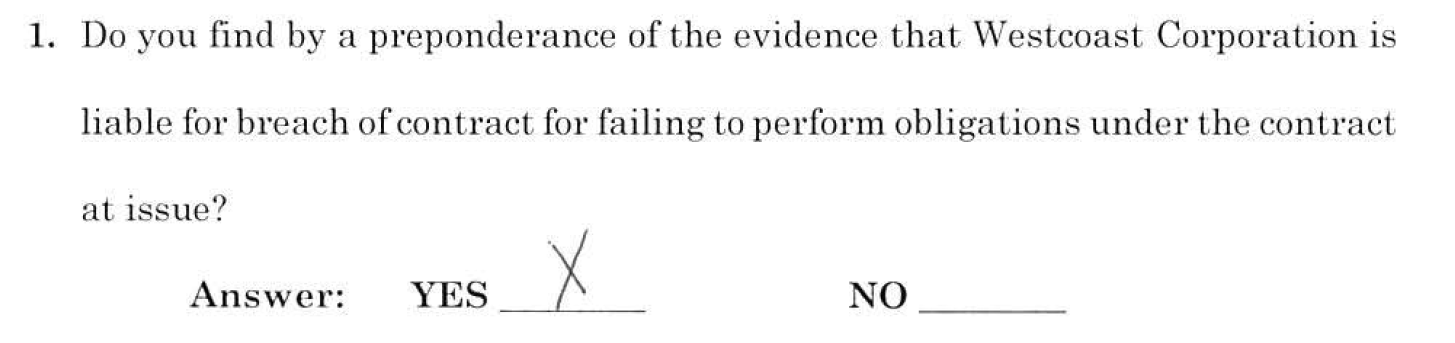
The Fifth Circuit held that it was not plain error, noting that earlier in the charge as part of the instructions, the jury had been told that if “one party to a contract substantially breaches the contract, then the breaching party cannot enforce the contract it has breached or demand damages form the other party to the contract.” The Court cited Baisden v. I’m Ready Prods., Inc., 693 F.3d 491, 506 (5th Cir. 2012), which allowed a question that “conflated the question of license (an affirmative defense . . . ) with that of infringement (a claim on which [plaintiff] carried the burden),” even though that question was “not a model of clarity.”
 This was a Louisiana case; by way of comparison (background only, given the deferential standard of review in this case), the Texas pattern charge on this point uses questions about both parties’ breach, drawing from Mustang Pipeline Co. v. Driver Pipeline Co., 134 S.W.3d 195 (Tex. 2004).
 Fed. R. Civ. P. 8(c) requires parties to “affirmatively state any avoidance or affirmative defense.” Germain v. U.S. Bank applied that rule in a mortgage-servicing case, reasoning: “Germain alleged that the Defendants did not comply with § 1024.41. The Defendants denied this allegation, insisting that they had complied with that section. That is a denial or direct contradiction of Germain’s claim, not an affirmative defense. The Defendants did not expressly rely on § 1024.41(i) in their answer, but the use of § 1024.41(i) in their motion for summary judgment is merely an expansion of the denial in their answer.” No. 18-10508 (April 3, 2019). (“8c” also refers to an Alfa Romeo model, pictured above for general reference.)
 Beckton Dickson & Co., a manufacturer of safety syringes, lost its antitrust claims against a competitor but prevailed on its Lanham Act claims, and sought the remedy of disgorgement. A panel majority concluded that:
[T]he district court did not abuse its discretion in determining that where [Defendant Retractable Technologies, Inc.] had not sufficiently demonstrated that its business suffered due to BD’s false advertising and where BD had already taken significant steps to correct the false statements, disgorgement was not equitable. That another court could have evaluated the facts differently does not justify reversal, especially as “an award of profits with no proof of harm is an uncommon remedy in a false advertising suit.”
The majority’s reasoning is best summarized by the final paragraph of its opinion, which observes:
The district court’s denial of disgorgement of profits from RTI’s competitor was made against the larger backdrop of its prosecution of a meritless antitrust claim against BD for conduct in the marketplace—during a time in which RTI nearly doubled its own sales and increased its share of the retractable syringe sub-market to two-thirds. RTI elected not to test its proof of Lanham Act damages before the jury, but rather to later argue, as now, that equity mandates disgorgement. Its effort to carry the flag of “public interest” and guide the profits of its competitor to its own coffers here must fail. That effort must be taken outside—to the marketplace. There the public interest is best vindicated.
A dissent thought that the district court had exceeded its mandate after a previous appeal. Retractable Technologies, Inc. v. Beckton Dickinson Inc., No. 17-40960 (March 26, 2019). Professor Rebecca Tushnet recently discussed the case on her 43(B) blog.
 The Tampa Bay Buccaneers football team sought recovery in BP’s Deepwater Horizon claims-processing system. It appealed to the Fifth Circuit, and requested that the courtroom be sealed for the oral argument. In a single-judge order, Judge Costa reviewed the general requirements about sealing, noted that it was the court’s decision and not the litigants’, and rejected the request: “As its right, Claimant ID 100246928 has used the federal courts in its attempt to obtain millions of dollars it believes BP owes because of the oil spill. But it should not able to benefit from this public resource while treating it like a private tribunal when there is no good reason to do so. On Monday, the public will be able to access the courtroom it pays for.” BP Exploration & Production v. Claimant ID 100246928, No. 18-30375 (March 29, 2019).
 Emphasizing a significant difference between Texas and federal practice, ENI US Operating Co. v. Transocean clarified Circuit precedent and held: “Under [Fed. R. Civ. P.] 52(a), implicit findings will not automatically be inferred to support a conclusory ultimate finding. The district court must lay out enough subsidiary findings to allow us to glean ‘a clear understanding of the analytical process by which [the] ultimate findings were reached and to assure us that the trial court took care in ascertaining the facts.” Finding that the district court’s reasoning was insufficiently developed under this standard, the Fifth Circuit remanded for more detailed findings on a key point. The Court also reversed on two other issues of
  contract law:
- A clause referring to an indemnity obligation for “special, indirect, or consequential damages,” while a “limitation on the type of damages allowed . . . says nothing about what type of claims can be brought” (and thus, does not preclude a breach-of-warranty action); and
- A damages calculation based on a steady contract price was flawed because “it looks to what Eni actually did after termination, when the operative question is what Eni would have done in a non-breach world. . . . The district court should have attempted to determine, in the hypothetical non-breach world, how many days the Pathfinder [above, left] would have spent at each applicable rate.”
No. 18-20115 (March 28, 2019).
This month’s “Headnotes” from the Dallas Bar Association has two items of particular interest — on page 18, information about each of the new “Slate of Eight” Justices on the Dallas Fifth District Court of Appeals; and on page 19, an article by me and my LPCH colleague John Volney about the Fifth Court’s recent cases on “trial by consent.”
 Defendant Blue Cross argued that Plaintiff Encompass’s claim was barred by prescription (limitations), and that contra non valentem (the civilian analog to the discovery rule) did not apply. Plaintiff received the offending letter in 2010, which “immediately caused Encompass to confer with counsel and seek clarification from [Blue Cross],” although Plaintiff did not sue until 2013. Plaintiff argued that the letter “falsified [Blue Cross] internal policies, which it could not discover until 2013 despite diligent inquiry. Although some statements in the letter were independently verifiable, Encompass says others were simultaneously false, damaging, and opaque to outsiders, and that “its diligence to investigate the letter—calling [the author] three times in 2010 and leaving messages without response—was reasonable under the circumstances.” The panel majority accepted the jury’s verdict in favor of the plaintiff; a dissent would have found contra non valentem unavailable as a matter of law. Encompass Office Solutions v. Blue Cross & Blue Shield of Louisiana, No. 17-10736 (March 19, 2019).
 Papalote, a wind-power producer, had a dispute with the Lower Colorado River Authority; a key issue was whether a $60 million limitation-of-liability clause applied. Their contract had an arbitration provision that applied “if any dispute arises with respect to either Party’s performance.” The Fifth Circuit found that the dispute was not subject to arbitration, as it “is a dispute related to the the interpretation of the Agreement, not a performance-related dispute . . . ..” Papalote Creek II v. Lower Colorado River Authority, No. 17-50852 (March 15, 2019).
 A colorful, and deft, summary of Iqbal’s pleading requirements in a § 1983 case appeared in Shaw v. Villanueva: “Shaw[] . . . has pleaded no specific facts showing that Villanueva and Ebrom misdirected Sotelo into issuing the arrest warrant. And so he has not established the exception to the independent-intermediary doctrine. In other words, his allegations are all broth and no beans.” No. 17-50937 (March 11, 2019). (A classic Texas Monthly article offers similar sayings, such as: “He thinks the sun comes up just to hear him crow,” etc.)
 A non-party appealed a discovery issue, complaining about confidentiality protection for documents it produced under subpoena in a complicated antitrust case. The Fifth Circuit reviewed the issue as a collateral order in Vantage Health Plan, Inc. v. Willis-Knighton Medical Center, No. 17-30867 (Jan. 9, 2019). Unfortunately for the movant, that review identified three problems with its position: “First, the bald assertion of competitive harm is insufficient, and Humana was repeatedly unable to articulate a specific harm that would be caused by the disclosure of the documents. Second, Humana ignores the fact that any documents not placed into the record will remain subject to the district court’s protective order and are restricted to ‘attorney’s eyes only.’ . . . Third, those documents that are ultimately filed on the record are still subject to the court’s redaction requirements, which cover all [specific numeric information rates and percentages].”
 The Fifth Circuit reversed a contempt order related to the Bureau of Prisons’ calculation of sentencing credits, noting, inter alia:
- Oral injunction? An oral injunction can be effective, where, as here: “[T]he oral injunction was not tentative, and the district court did not indicate that the sanction was open to further argument or reconsideration. Rather, the district court asked the BOP to affirm that it understood the scope of the injunction.”
- Limits to inherent power. “The contempt power is not an appropriate means for a district court to express its reasoned disagreement with a federal statute. Threatening government officials with individual contempt sanctions for complying with federal law, as the district court did here, is a clear abuse of discretion.”
- Specificity required. “The district court made no explicit factual findings to support its decisionto hold the BOP in contempt. Nor did it identify which specific court orders the BOP violated, notwithstanding the BOP’s ‘request that the Court clarify itsorder to reflect such findings as to how and when the Respondents violated anorder of th[e] court.’ The district court’s refusal to identify the basis for its contempt finding was in itself an abuse of discretion.”
In re U.S. Bureau of Prisons, No. 18-50512 (March 14, 2019).
.

Louisiana’s courts have seen a host of claims about asbestos exposure involving the Avondale Shipyard near New Orleans. (Now closed, Avondale was once the largest employer in Louisiana; to the right is the USS Iowa entering the shipyard for repairs.). In turn, those asbestos claims have led to a stream of federal-court removals based on the “federal officer” statute. Those cases have brought to light some inconsistencies in Fifth Circuit precedent, culminating in a plea for en banc review in Latiolais v. Huntington Ingalls, which summarizes the present situation:
This case exemplifies the problem. Avondale refurbished vessels using asbestos insulation as directed by the Navy. Because Avondale ran its own safety department free of Navy directives, however, any alleged failure by Avondale to warn its employees or others about asbestos is not an act under color of federal office, so Avondale is not being sued “for” a federal act. However, Avondale’s failure to warn about asbestos certainly “relates to” its federal act of building the ships. Applying the [current] statutory language would change the outcome of this appeal and would authorize removal of many more cases than the causal nexus test permits.
No. 18-30652 (March 11, 2019).
 A 1994 Fifth Circuit opinion addressed whether the “Indian Tribes of Texas Restoration Act” or the “Indian Gaming Restoration Act” controlled Indian gaming in Texas (answer, the Restoration Act). In 2015, the National Indian Gaming Commission, citing intervening Supreme Court precedent, ruled otherwise. The Fifth Circuit declined to extend Chevron deference to that later ruling, noting:
“[This case] requires us to apply Chevron step one to a prior judicial interpretation and to determine whether that court employed traditional tools of statutory interpretation and found that Congress spoke to the precise issue. That is what Ysleta I did in holding that “the Restoration Act prevails over IGRA when gaming activities proposed by [the Pueblo or Tribe] are at issue. Consequently, the NIGC’s decision that IGRA applies to the Tribe does not displace Ysleta I.”
State v. Alabama-Coushatta Tribe, No. 18-40116 (March 14, 2019).
 United States v. Ayelotan affirmed the conviction of three cybercriminals who stole money with “a sprawling international romance scam.” In addition to using the word “fauxmance” for the first time in a Fifth Circuit opinion, and among other holdings, the Court rejected hearsay objections to a number of emails related to the scheme:
- For each email, the transmittal records maintained by Google and Yahoo! qualified as business records;
- The statements were not offered to prove the truth of the matter of asserted; rather,
 they were “paradigmatic nonhearsay” in the form of “the operative words of the criminal action”;
 - And the “remaining content . . . updates between the coconspirators about their criminal scheme–was admissible as opposing party and coconspirator statements under Rule 801(d).”
No. 17-60397 (March 4, 2019).
 An insurer argued that its insured breached the policy’s cooperation clause by not dismissing a counterclaim against a third party. The Fifth Circuit disagreed: “Mid-Continent offers no law to support its novel and dubious concept that the Cooperation Clause applies to an insured’s affirmative claims against a third party, and the direction of the law in this area is against such a conclusion.” Mid-Continent Casualty Co. v. Petroleum Solutions, Inc., No. 17-20652 (Feb. 26, 2019).
 Collateral estoppel is ordinarily an affirmative defense that must be pleaded, with two exceptions: (1) when both actions were brought in courts of the same district, or when all of the relevant facts are contained in the record and uncontroverted. OneBeacon Am. Ins. Co. v. Barnett, No. 18-60224 (Feb. 27, 2019).
 In Louisiana Real Estate Appraisers Board v. FTC, the Fifth Circuit declined to apply the “collateral order” doctrine to an interlocutory order of an administrative agency, leaving open the possibility that the doctrine could so be applied in a different situation. No. 18-60291 (Feb. 28, 2019).
The Fifth Circuit’s new opinion in Seeligson v. Devon Energy changed its holding about a class-wide damages theory from its earlier opinion. The Court now concludes that while “it is possible that Plaintiffs could demonstrate that [Defendant] breached its implied duty to market” at a certain price, and “[i]f so, this is precisely the type of common question” that would support certification – “this court remains open as to whether damages can be ascertained on a classwide basis” and remanded for further evaluation of whether breach and damages “can be evaluated classwide or if a well-by-well analysis is required.” No. 17-10320 (revised February 20, 2019).
 Contemporary mandamus practice in the Fifth Circuit is well-illustrated by In re JPMorgan Chase, in which the Court concluded:
- An order requiring individual notice to 42,000 former Chase employees, as part of the conditional certification of a collective action under the FLSA, was not remediable by an ordinary appeal;
- The issue of whether notice should be sent to employees with arbitration agreements — roughly 30,000 of the relevant employees — “has importance well beyond this case, so mandamus relief would be appropriate;
- The district court’s decision to require notice to those “Arbitration Employees” was not a “clear and indisputable” error, given the state of the case law at the time of its decision; but
- After review of the law, the Court concluded that the district court was in fact wrong. As the court had now “issue[d] this published as a holding on these legal issues,” it stayed the case for thirty days “[t]o facilitate . . . review” of “its decision in light of this opinion, which is now binding precedent throughout the Fifth Circuit.”
No. 18-20825 (Feb. 21, 2019) (applying, inter alia. In re: Depuy Orthopaedics, Inc., 870 F.3d 345, 350 (5th Cir. 2017)).
 A Mississippi regulatory board for engineers sought to ban the use of the phrase “Tire Engineers” by an oil-change business (right); the Fifth Circuit disagreed with it: “Evidence offered by both parties, particularly when viewed in the light most favorable to Express as the non-moving party, demonstrates that other states with similar statutes have not challenged the use of the trademark. Thus, despite claims to the contrary, the Board is an outlier in this respect, and it fails to address why alternative, less-restrictive means, such as a disclaimer, would not accomplish its stated goal of protecting the public. The Board thereby fails to satisfy the required burden of demonstrating a reasonable fit between its regulation and the constitutionally-protected speech.” Express Oil Change LLC v. Mississippi Board of Licensure for Profesional Engineers & Surveyors, No. 18-60144 (Feb. 19, 2019).
In a borrower’s lawsuit against the servicer of a home equity loan, the district court entered a partial final judgment pursuant to Fed. R. Civ. P. 54(b) on January 4, 2018. Then, after further review of a remaining claim by a magistrate judge, it entered a second judgment resolving the rest of the case on January 31. The Fifth Circuit held that the notice of appeal was timely as to the second judgment, but not the first. The Court had considerable doubt about whether the appeal of the second judgment could be used to question whether Rule 54(b) had properly been invoked in the first, and also found that the district court had properly used that Rule to handle the borrower’s various claims. Johnson v. Ocwen Loan Servicing LLC, No. 18-10257 (Feb. 21, 2019).
 Mardi Gras comes late this year – Tuesday, March 5 – here is the energy-filled parade schedule leading up to New Orleans’ big day.
 Wallace alleged that he had been retaliated against in violation of the Sarbanes-Oxley Act; the dispute about the objective reasonableness of his beliefs about the disclosure of sales tax payments in turn led to an accounting dispute, which Wallace lost after his expert was found to not have been properly disclosed. Wallace argued that the pertinent testimony was lay rather than expert, but the Fifth Circuit disagreed:
Rule [the expert]’s training, education, and experience included “‘refinery economics, strategy management for commercial crude oil, business development,’ and . . . ‘transfer pric[ing] between operating segments.’” Notably, Rule did not deal explicitly with tax calculations, SEC reporting requirements, or investor relations. We conclude that Rule’s declaration as to paragraph 22 could not have been based on his lay experience as a Tesoro employee but rather on specialized accounting knowledge. Rule’s opinion on the application of tax accounting definitions to the SEC disclosures is an example of Rule applying his “specialized knowledge” to “help the trier of fact . . . understand the evidence.
Wallace v. Andeavor Corp., No. 17-50927 (Feb. 15, 2019).
 The Coen Brothers’ 2008 movie, Burn After Reading, a comedy about spy agencies in pursuit of a “secret” document that is anything but, ends with the leaders of the CIA saying: “‘I guess we learned not to do it again,’ . . . despite not knowing exactly what they did[,]” Similarly, the revised panel majority in Nall v. BNSF Railway Co., in again finding a triable issue on the plaintiff’s disability-discrimination claim, observes:
“The dissent from our original opinion, as well as the petition for rehearing en banc and two amicus curiae submissions in support of it, expressed concern that the panel majority had imposed a new requirement for assertion of the direct-threat defense, to-wit: that in addition to showing that the employment decision was objectively reasonable, the employer must also establish that the process itself that was utilized in reaching that decision, considered separately, was objectively reasonable. Without commenting further on the efficacy of such an approach or on whether the panel majority actually adopted it, we emphasize that nothing in this substitute opinion should be understood as employing that reasoning.”
No. 17-20113 (revised Feb. 15, 2019) (emphasis added).A revised special concurrence continued to mourn the sprawl of the McDonnell-Douglas framework; a revised dissent praised the “well articulated” en banc petition and “persuasive” amicus submissions. The original opinions can be read here.
 Xitronix Corp. alleged that KLA-Tencor Corp. violated the antitrust laws by fraudulently obtaining a patent from the U.S. Patent and Trademark Office. The trial court granted summary judgment to KLA, appeal was taken to the Federal Circuit, which then transferred the appeal to the Fifth Circuit – who then transferred the case back to the Federal Circuit in Xitronix Corp. v. KLA-Tencor Corp. Distinguishing the recent Supreme Court case about an attorney malpractice claim involving patent law, Gunn v. Minton, 133 S.Ct. 1059 (2013), the Fifth Circuit observed:
“This case concerns a patent that is currently valid and enforceable, issued following a PTO proceeding heretofore viewed as lawful. This litigation has the potential to render that patent effectively unenforceable and to declare the PTO proceeding tainted by illegality. This alone distinguishes the present case from Gunn. The adjudication of this Walker Process claim also implicates the interaction between the PTO and Article III courts. The district court’s acerbic statements about the PTO at summary judgment point to the complexity of relations between proceedings in federal court and before the PTO.”
No. 18-50114 (Feb. 15, 2019).
 A nonprofit lacked standing to pursue a facial First Amendment challenge to an IRS regulation in Freedom Path, Inc. v. Internal Revenue Service: “Freedom Path’s claimed inability to know what communications will be deemed in pursuit of an exempt function is not an injury arising from the four corners of the Revenue Ruling but quite explicitly from its application beyond the facial terms. Thus, Freedom Path’s claimed chilled-speech injury is not fairly traceable to the text of Revenue Ruling 2004-6, meaning it does not have standing to bring this facial challenge.” No. 18-10092 (Jan. 16, 2019).
 Alaska Electrical Pension Fund v. Flotek Industries shows how demanding the federal securities laws are as to the issue of “scienter,” The plaintiffs alleged misrepresentations by the defendant about the viability of its software product called “FracMax,” which analyzes data about hydraulically-fractured oil and gas wells. These four alleged misrepresentations were not sufficient to produce the required “strong inference of scienter:
- “Defendants’ repeated use of the term “conclusive” in describing FracMax’s effect, which Plaintiffs characterize as tantamount to assuring that FracMax’s data was irrefutable”;
- “Defendants’ reference to FracMax data as “unadjusted” when, in fact, FracMax used an algorithm to adjust certain data”;
- “Defendant Chisholm [the CEO]’s presentation at the September 11, 2015, conference of direct comparisons between several wells that used CnF [a technology measured by FracMax] versus several that did not, which Defendants concede relied on incorrect data for the non-CnF wells”; and
- “Chisholm’s representation at this same conference that this data was ‘back check[ed] and validate[d],’ when Defendants later admitted that ‘Flotek had no internal controls in place to ensure the integrity of the FracMax database.'”
No. 17-20308 (Feb. 7, 2019).
 The surprisingly-complex issue of voluntary dismissal, addressed by Fed. R. Civ. P. 41(a), led to the novel question in Welsh v. Correct Care LLC of whether the lack of an answer to an amended complaint, when the original pleading had been answered, allowed an automatic dismissal without prejudice. The Fifth Circuit held that it did not, and further noted that before the district court could condition such a dismissal on it being with prejudice, it would have to give the plaintiff a choice, as “[a] plaintiff typically ‘has the option to refuse a Rule 41(a)(2) voluntary dismissal and to proceed with its case if the conditions imposed by the court are too onerous.'” No. 17-11522 (Feb. 7, 2019).
 The Fifth Circuit sidestepped a question about the scope of the “equitable mootness” doctrine, in favor of reliance on section 363(m) of the Bankruptcy Code, which (in the Court’s summary of the statute’s clunky terms) “limits the ability of appellate courts to review the sale of estate property when the order approving the transaction is not stayed.” To avoid the statute, the would-be appellant “says it does not challenge the sale of the property but only challenges the disbursement of cash to the probate estate.” That distinction did not moo-ve the Court, as it reasoned: “Without the more than $8 million payment, the probate estate would not have released its claim that it owned the Channelview shipyard. And without that release, San Jac Marine likely would have walked away from the deal. As the bankruptcy court noted, there is no way to sever
the settlement from the sale; they are mutually dependent.” No. 18-40350 (Feb.5, 2019).
 The Coston Flare, the first technically and commercially viable maritime flare, was a universal attention-getting sign at sea for many years. Similarly, the “Rule of Orderliness Opinion” attracts en banc review in the Fifth Circuit; the most recent example being a January 17 panel dissent about circuit precedent on the viability of a patient’s implied right of action under the Medicaid Act, which led to a February 5 vote to take the issue en banc. In that spirit, yesterday’s 3-opinion panel resolution of Wittmer v. Phillips 66 Co.raises the question whether circuit precedent addresses Title VII’s applicability to discrimination based on sexual orientation. No. 18-20251 (Feb. 6, 2019).
 The Pugas received a substantial judgment in their favor after a jury trial, arising from a collision with a truck controlled by RXC Solutions. The Fifth Circuit substantially affirmed, holding, inter alia:
- Preservation. The defendant’s FRCP 50(b) motion, based on the argument that federal law does not allow courts to hold motor carriers liable for the acts of independent contractors, was not permissible when its 50(a) motion only attacked the sufficiency of the evidence about the driver’s employee status and alleged negligence;
- Jury charge. The district court did not abuse its discretion when it “closely examined the statute, avoided the obvious, overbroad definition of motor carrier, and picked out the correct, limited definition.”
- Expert testimony. The defendant’s objections to the testimony of an accident investigator went to weight rather than admissibility, even though “[i]t did not take into account every possible explanation for the accident, and some measurements were missing.”
- Remittitur. “We measure disproportionality by applying a percentage enhancement to past similar awards. This enhancement is 50% for jury trials.”
Puga v. RCX Solutions, Inc., No. 17-41282 (Feb. 1, 2019).
St. Bernard Parish v. Lafarge North America, the long-running litigation about damages related to Hurricane Katrina and a large Lafarge barge, led to an appeal by Seymour – a former attorney for some of the claimaints, whose attempt to intervene in the case and collect his fee was rejected. The Fifth Circuit affirmed, noting, inter alia, that he was not entitled to rely upon representation of his interests by other parties after his 2011 withdrawal, and that he appeared capable of pursuing relief in other fora. No. 18-30029 (Feb. 1, 2019).
 The removal statute does not allow an in-state defendant to remove a case, even if diversity exists. That rule imposes a substantial limitation on removable cases. But if such a removal survives to final judgment, the judgment will stand: ” The removal bar of 28 U.S.C. § 1441(b), however, is procedural and not jurisdictional. Therefore, ‘where there is improper removal, the pertinent question is whether the removed action could have been filed originally in federal court; and, if it could have been and the action has proceeded to judgment on the merits in federal court, that judgment will not be disturbed.'” There is complete diversity, so the case could have been brought originally in federal district court. Furthermore, Lamb did not object to removal in the district court, and the case has proceeded to a judgment on the merits. Lamb v. Ashford Place Apartments LLC, No. 18-30469 (Jan. 30, 2019) (citations omitted, emphasis in original).
In Springboards to Education v. Houston ISD, an education-services company sued the Houston school district about a summer reading program. The company’s program, called the “Read a Million Words Campaign,” offered incentives to join the “Millionaire’s Reading Club” and gave prizes when students reached their reading goals. HISD’s program, focused just on summer reading, involved the “Houston ISD Millionaire Club” and similar sorts of goal-related gifts. In affirming a summary judgment for HISD, the Fifth Circuit made two important, general observations about the purposes of t rademark law:
- Trademark law protects marks – not process. “HISD could have copied the methodologies used in the Read a Million Words campaign step by step, and, whatever other problems that might have engendered, as long as it used clearly distinguishable nomenclature, Springboards would have no argument that HISD violated the Lanham Act in doing so.” The Court noted that a patent could, at least in theory, potentially protect such processes.
- Purchaser confusion is the key – not “confusion” generally. The Court noted that confusion about the programs involving HISD students and their parents was relevant – but only to the extent it bore on the test for evaluating confusion by potential purchasers of Springboards’ products. “Looking the digits of confusion for guidance, we conclude that no reasonable jury could find a likelihood of confusion. Springboards’ marks are not widely known and are similar or identical to multiple third-party marks. HISD did not market the Houston ISD Millionaire Club to Springboards’ potential customers—i.e., third-party school districts. There is no evidence of an intent to confuse. And Springboards’ potential customers are sophisticated institutional purchasers that are not easily confused. The only digit pointing unwaveringly in Springboards’ favor is the similarity of the products. But even this does not strongly suggest a likelihood of confusion given the popularity of millionaire-themed literacy programs.” (emphasis added).
No. 18-20119 (revised Feb. 14, 2019).
 Moss and Keating sued Princip, Martin, and the partnership to which the four of them belonged. The defendants removed the case, but after an adverse verdict, raised a problem with subject matter jurisdiction: Moss and Keating were diverse from Princip and Martin – but the partnership, as a citizen of every place the partners lived, was not. The district court dismissed the partnership from the case, finding it necessary but dispensable, and the Fifth Circuit affirmed:
“Although the plaintiffs raised claims for damages derivative of the partnership’s rights, the partnership’s presence in the suit was not necessary to protect the partnership or any of the parties from prejudice. The partnership was a party throughout the litigation, but its role was purely passive, reflecting the reality that its interests did not diverge from the interests represented by the four individual partners and that its presence played no distinct role in the outcome of the suit against the individuals.”
Moss v. Princip, No. 16-10605 (Jan. 16, 2019).
 84 Lumber lost, at the pretrial stage, a construction dispute with Paschen, a general contractor. Paschen then dismissed without prejudice its third-party action against J.A., a general contractor, after which 84 Lumber appealed. The jurisdictional question was whether that dismissal without prejudice made the case unappealable under Ryan v. Occidental Petroleum 577 F.2d 298 (5th Cir. 1978). The Fifth Circuit concluded that it did not: “The purpose of the Ryan rule is to prevent the appealing party from manufacturing jurisdiction by using an ‘end-run around the final judgment rule to convert an otherwise non-final—and thus nonappealable—ruling into a final decision appealable under § 1291.’ But the plaintiff, 84 Lumber, did not participate in Paschen’s dismissal of its remaining third-party claim against J & A, so it did not manufacture appellate jurisdiction.” 84 Lumber Co. v. Continental Casualty Co., No. 18-30170 (Jan. 24, 2019).
 A reminder on a basic point of judgment finality for appeal purposes: “FRAP 4(a)(1)(1)(A) requires litigants to file a notice of appeal ‘within 30 days after entry of the judgment or order appealed from.’ The district court entered judgment on March 6, 2018. Kleinman moved for attorney’s fees on March 20, which the court awarded on June 26. Kleinman appealed both the judgment and the fees award on July 23—over four months late for the judgment on the merits. And contrary to Kleinman’s arguments, ‘[m]otions addressing costs and attorney’s fees . . . are considered collateral to the judgment, and do not toll the time period for filing an appeal.’” Kleinman v. City of Austin, No. 18-50612 (Jan. 25, 2019, unpubl.)
June Medical Services v. Gee, a 2-1 decision allowing various restrictions and regulations placed on abortion procedures by Louisiana (Judge Smith, writing for the majority, joined by Judge Clement, with Judge Higginbotham dissenting), recently went to an en banc vote that fell largely along the lines of the judges’ political party of nomination – 6 judges voted in favor of rehearing (Chief Judge Stewart and Judges Dennis, Southwick, Graves, Higginson, and Costa), and 9 judges voted against rehearing (Judges Jones, Smith, Owen, Elrod, Haynes, Willett, Ho, Engelhardt, and Oldham).
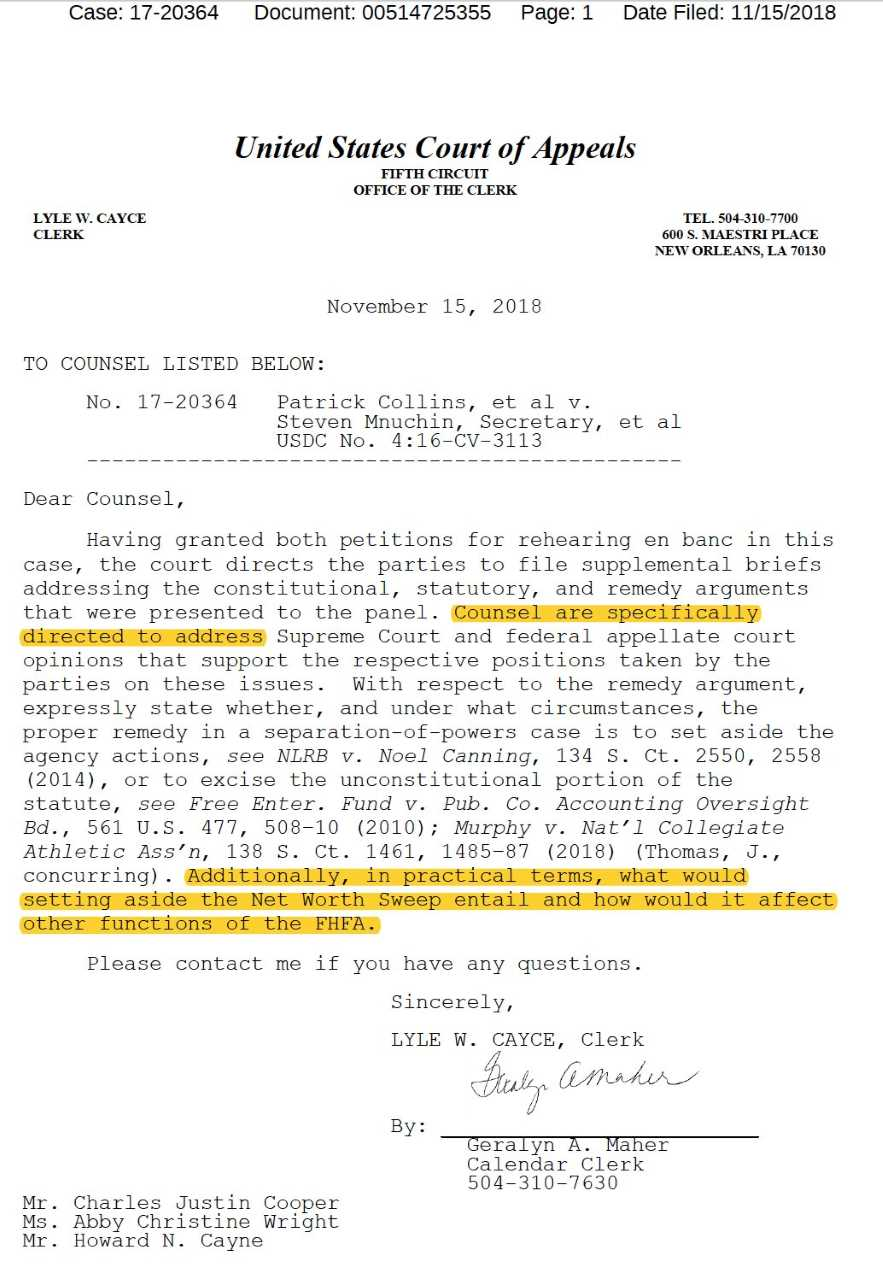
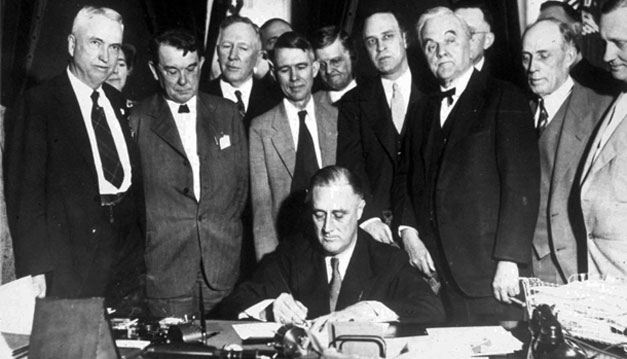 The fractured panel in Collins v. Mnuchin, which addressed the legality of “sweeps” of funds from Fannie Mae and Freddie Mac by their regulator, led to a fascinating en banc argument today in New Orleans as the Court reviewed fundamental administrative-law issues.
 The novel situation of a bankruptcy debtor, who emerged from bankruptcy proceedings solvent thanks to a luckily-timed rise in crude oil prices, gave rise to a fundamental if infrequently-encountered question: “whether the . . . creditors are ‘impaired’ by a plan that paid them everything allowed by the Bankruptcy Code.” The bankruptcy court said that they were, reasoning that a plan impairs a creditor if it refuses to pay an amount the Bankruptcy Code independently disallows; accordingly, it required a “make-whole” payment to certain creditors and set postpetition interest at a contractual rate. The Fifth Circuit saw a “monolithic mountain” of contrary authority, and reversed and remanded, holding that “the Code—not the reorganization plan—defines and limits the claim in these circumstances.” Ultra Petroleum Corp. v. Ad Hoc Committee, No. 17-20793 (Jan. 17, 2019), revised/shortened on rehearing, Nov 26, 2019.
 The official investiture of the eight new Justices on the Fifth Court of Appeals will be at 3:30 on January 30, 2019, at the Belo Mansion in downtown Dallas.
After the November 2018 elections, the new leadership of Harris County moved to dismiss the appeal of long-running litigation about the county’s pretrial bail policy (most recently, the stay pending appeal granted in O’Donnell v. Goodhart, 900 F.3d 220 (5th Cir. 2018)). That panel rejected the movants’ request to vacate its opinion, noting the exceptional effort made to handle the case quickly and accurately, and finding that that situation was not analogous to an appeal that becomes moot. The panel agreed that “a merits panel is not bound by a motions panel,” but observed: “[T]hat is irrelevant because there is not, and never will be, a merits panel” as a result of the dismissal. O’Donnell v. Salgado, No. 18-20466 (Jan. 14, 2019).
 In a counterpoint to last month’s decision in SEC v. Sethi, the Fifth Circuit reversed a summary judgment about whether oil-and-gas investment contracts qualified as “securities” for purposes of 10(b)(5) and 15(a) liability: “Fifteen investors also submitted affidavits declaring that they had the power to, and did in fact, vote on a variety of decisions. And the record does not show that Arcturus or Aschere took any significant actions without the investors’ prior approval. The fact that the investors voted and took actions to manage the drilling projects makes this case different than others where the district court appropriately granted summary judgment.” SEC v. Arcturus Corp., No. 17-10503 (Jan. 7, 2019).
 Thompson v. Dallas City Attorney’s Office appears to present the first use, in the history of the federal judiciary, of both the words “augurs” and “morphed” in a circuit-court opinion. It also carefully reviews the “vexing” question of when an earlier Fifth Circuit opinion should not be followed, despite the “rule of orderliness,” because that opinion was inconsistent with Supreme Court precedent when written. The Court found that Henson v. Columbus Bank & Trust Co., 651 F.2d 320 (5th Cir. 1981) was such a case, noting:
- prior Supreme Court precedent on the relevant res judicata question, which Henson did not address or even acknowledge;
- further Supreme Court precedent, issued soon after Henson, reaffirming the earlier opinion;
- consistent Fifth Circuit case law since Henson that did not apply it; and
- a paucity of citations to Henson.
In sum: “Orderliness, rightly understood, compels deference, not defiance. And disregarding on-point precedent in favor of an aberrational decision flouting that precedent is the antithesis of orderlinesss.” No. 17-10952 (Jan. 11, 2019).
 Swearingen sued her former employer, Gillar Home Health Care, for not accommodating her pregnancy-related disability. At trial, “liability turned on whether Swearingen sent Evelyn Zapalac, the supervisor who fired her, a doctor’s note to corroborate a medical-related absence or if Swearingen instead simply failed to report for work.” The trial court allowed the defense to read Zapalac’s deposition testimony rather than calling her live. The Fifth Circuit reversed and remanded. Swearingen v. Gillar Home Health Care LP, No. 17-20600 (Jan. 11, 2019) (unpublished).
While Zapalac lived 95.5 miles from the courthouse – 4.5 miles short of the 100-mile radius that makes a witness “unavailable” under Fed. R. Civ. P. 32 – the Court observed: “The Rule does not use a modifier such as ‘about’ or ‘approximately’ or ‘around.'” The Court further noted that this rule’s requirements have been “summarized . . . as prohibiting deposition testimony unless ”live testimony from the deponent is impossible or highly impracticable.'” And this error was harmful because “the only person who testified to knowing Zapalac did not receive the doctor’s note was Zapalac herself,” making “the harm . . . especially acute because liability inged on competing credibility determinations.” Note that a different result would obtain in state court under Tex. R. Evid. 801(e)(1) which defines as a non-hearsay statement: “A Deponent’s Statement. In a civil case, the statement was made in a deposition taken in the same proceeding. ‘Same proceeding’ is defined in Rule of Civil Procedure 203.6(b). The deponent’s unavailability as a witness is not a requirement for admissibility.”
Wease established ambiguity in two as pects of a deed of trust. With respect to when a servicer could pay the borrower’s property taxes by the servicer, the key provision used the fact-specific phrase “reasonable or appropriate”; other provisions both suggested that the power was limited to back taxes, but also that it could be made “at any time.” Accordingly, “Wease was entitled to proceed to trial on his claim that Ocwen breached the contract by paying his 2010 taxes before the tax lien attached and before they became delinquent.” This analysis led to finding a triable fact issue as to whether Ocwen provided adequate notice of its actions. Wease v. Ocwen Loan Servicing, No. 17-01574 (Jan. 4, 2019). A revised opinion eliminated some statements about tax liens and when they took effect.
In Janvey v. GMAG, LLC, the Fifth Circuit retur ned to the “good faith” defense to a claim under the Texas Uniform Fraudulent Transfer Act – a defense that potentially allows an innocent third-party to retain the benefit of a transfer made by a debtor with intent to defraud creditors. The specific question was whether the Texas Supreme Court would accept a “futility” defense to inquiry notice, and the Court concluded that it would not: “No prior court considering TUFTA good faith has applied a futility exception to this exception, and we decline to hold that the Supreme Court of Texas would do so. Transferees seeking to retain fraudulent transfers might offer up evidence of undertaken investigations to prove a reasonable person’s suspicions would not have been aroused when the transfer was received. But the fact that a fraud or scheme is later determined to be too complex for discovery does not excuse a finding of inquiry notice and does not warrant the application of TUFTA good faith.” No. 17-11526 (Jan. 9, 2019).
 In Conestoga Trust v. Columbus Life Ins. Co., the Fifth Circuit found that the trial court’s charge erroneously placed the burden of proof on the insured – rather than the insurer – as to an issue about delivery of a grace notice before termination of the policy. The next question was whether this error was sufficiently harmful to require reversal; the insured “claims that the district court’s improper placement of the burden constituted prejudicial error because, given the lack of direct evidence, the burden of proof was likely outcome-determinative,” while the insurer “concludes that any error concerning the burden of proof is harmless because the record demonstrates that Columbus presented ample evidence that it mailed the Grace Notice.” Acknowledging that a burden-of-proof error does not automatically require reversal, the Court concluded:
“While the misallocation of the burden of proof did not produce an ‘irrational verdict’ here, the evidence—though largely in favor of Columbus—is not so one-sided that Conestoga failed to present a genuine issue of material fact. Given that the jury was incorrectly instructed on the law on the sole issue before it, we are left with ‘a substantial doubt whether the jury was fairly guided in its deliberations.'”
No. 17-50073 (Jan. 3, 2019, unpublished).
 Justice Kavanaugh’s first signed Supreme Court opinion was a 9-0 reversal of the Fifth Circuit in Schein v. Archer & White, 17-1272 (Jan. 8, 2019). The Fifth Circuit opinion found that the district court, rather than the arbitrator, could make a decision about arbitrability when the request for arbitration was “wholly groundless”; the Supreme Court rejected that line of authority and held that this language vested the arbitrator with sole authority over such disputes:
“Disputes. This Agreement shall be governed by the laws of the State of North Carolina. Any dispute arising under or related to this Agreement (except for actions seeking injunctive relief and disputes related to trademarks, trade secrets, or other intellectual property of [Schein]), shall be resolved by binding ar- bitration in accordance with the arbitration rules of the American Arbitration Association [(AAA)]. The place of arbitration shall be in Charlotte, North Carolina.”
 The Mississippi state flag incorporates the Confederacy’s “Stars and Bars”; in Mississippi Rising Coalition v. City of Ocean Springs, plaintiffs challenged a local ordinance requiring that the flag be flown over city hall and other municipal buildings. In particular, they alleged that the law “amounts to ‘racial steering’ under the [Fair Housing Act] because it deters African-Americans from living in or moving to Ocean Springs.” Citing recent authority that rejected the plaintiffs’ standing to bring an equal protection challenge to a similar law, the Fifth Circuit found that these plaintiffs also lacked both constitutional and statutory standing: “Even assuming arguendo that displaying a state flag could be considered ‘making’ or ‘publishing’ a ‘notice, statement, or advertisement,’ that alone does not plausibly suggest that the City has done
anything ‘with respect to the sale or rental of a dwelling.'” No. 18-60473 (Dec. 3, 2018).
 I was on a CLE panel at the Belo today about the Texas anti-SLAPP statute with my partner Josh Sandler and Hon. Gena Slaughter of Dallas’s 191st District Court; here is a copy of our PowerPoint presentation.
 Gurule, a waitress, sued her employer for violations of federal labor law about its handling of overtime and tips. After rejecting a Rule 68 settlement offer of $3,133.34, she went to trial and won $1,131.39. The district court awarded her that amount, as well as $25,089.30 in attorneys’ fees – a significant reduction from the $129,565 requested by her counsel – minus a cost award of $1,517.57, given her rejection of the Rule 68 offer. The Fifth Circuit affirmed, finding that the rejection of the Rule 68 offer should be considered as a relevant factor in determining an appropriate fee award, but not a dispositive one. Gurule v. Land Guardian, Inc., No. 17-20710 (Dec. 27, 2018).
 In a residential foreclosure case, the borrower alleged that the bank/lender was vicariously liable for alleged RESPA violations by the servicer. Noting that it was the first federal circuit court to address the point, the Fifth Circuit found that the lender could not be held vicariously liable. The regulation at issue imposed duties only on
servicers. (12 C.F.R. § 1024.41(c)(1) (“[A] servicer shall . . .”)) And when Congress wanted to expand liability, it used language showing its intent to do so. (12 U.S.C. § 2607 (saying that “no person” will pay kickbacks or unearned fees)). Christiana Trust v. Riddle, No. 17-11429 (Dec. 21, 2018).
 Together with LPCH colleagues John Adams and Paulette Miniter, I’ve written three articles about the effect of the 2018 judicial elections in three areas:
- Removal. “Removal to Federal Court After the November 2018 Elections:
More Incentive, But Less Receptiveness?” - Standards of Review. The Return of Factual Sufficiency Review?
- Roles of judge and jury. Three Sentences to Study: Potential New Court of Appeals Perspectives
Ironshore, an excess insurance carrier, alleged that the Schiff Hardin law firm made negligent misrepresentations to it while reporting on litigation involving Dorel – the firm’s client and Ironshore’s insured. The Fifth Circuit made “an Erie guess that the Supreme Court of Texas would apply the attorney immunity doctrine to shield attorneys for such negligent misrepresentation claims.” It then concluded:
“The factual allegations of the complaint in this case reflect that all of the alleged misrepresentations and omissions were related to Schiff Hardin’s representation of Dorel in the Hinson litigation. Looking beyond Ironshore’s characterization of the firm’s conduct as wrongful, as we must, the type of conduct at issue in this case includes: (1) reporting on the status of litigation and settlement discussions; (2) providing opinions as to the strength and valuation of plaintiffs’ claims; (3) providing opinions as to the perceived litigation strategies employed by opposing counsel and the potential prejudice of pre-trial developments; (4) providing estimates of potential liability; (5) reporting on the progress of a jury trial; and (6) reporting on pre-trial rulings and pre-trial settlement offers. We are satisfied that the kinds of conduct at issue in
Ironshore Europe DAC v. Schiff Hardin LLP, No. 18-40101 (Jan. 2, 2019).
 A textbook example of the “rule of orderliness” appears in Gahagan v. U.S. Dep’t of Justice, a dispute about the recovery of attorneys’ fees under FOIA by an attorney proceeding pro se:
- In Cazalas v. DOJ, 709 F.2d 1051, 1057 (5th Cir. 1983), a panel majority of the Fifth Circuit held that “a litigant attorney represent[ing] herself or himself” is eligible for “an award of attorney fees under the FOIA.”
- In Kay v. Ehrler, 499 U.S. 432, 438, 435 (1991), which arose under 42 U.S.C. § 1988, the Supreme Court rejected “[a] rule that authorizes awards of counsel fees to pro se litigants— even if limited to those who are members of the bar,” for fear it “would create a disincentive to employ counsel whenever such a plaintiff considered himself competent to litigate on his own behalf.” Therefore, “a pro se litigant who is also a lawyer may [not] be awarded attorney’s fees.”
- In Texas v. ICC, 935 F.2d 728, 733 (5th Cir. 1991), citing Cazalas, the Fifth Circuit held that :”courts can in appropriate circumstances award attorneys fees to states” under FOIA.
“Whether Cazalas is still binding turns on first- and second-order questions under the rule of orderliness. The first question is whether ICC requires us to follow Cazalas. It does not. The second question is whether Kay requires us to abandon Cazalas. It does.” Kay overruled the rationale of Cazalas, and while ICC nominally followed Cazalas, it did not analyze the effect of Kay.
 Nall, who worked for BNSF as a trainman, suffered from Parkinson’s disease, and sued BNSF for disability discrimination. The panel majority noted that BNSF had provided different descriptions of a trainman’s duties at different times, and that a key BNSF witness agreed with a version that helped Nall’s position. It thus found a fact issue, specifically described as follows:
We emphasize that our inquiry on the issue of objective reasonableness does not ask whether BNSF’s conclusion that Nall could not perform his job duties safely was a reasonable medical judgment. Instead, we ask whether BNSF actually exercised that judgment. In other words, the question on appeal is not whether it was reasonable for BNSF to conclude that Parkinson’s disease symptoms prevented Nall from safely performing his duties; the question is whether BNSF came to that conclusion via a reasonable process that was not, as Nall alleges, manipulated midstream to achieve BNSF’s desired result of disqualifying him. More precisely, the question is whether there is any evidence in the record which, if believed, would be sufficient to support a jury finding.
 (emphasis in original). A dissent observed: “There is no basis for imposing liability under the ADA based on process concerns alone. There is liability only if the employer’s determination of a direct threat is objectively unreasonable.” A concurrence noted the “kudzu-like creep” of the McDonnell-Douglas burden-shifting framework, and as to dissent, observed that it “reminds me of the baseball player who said, ‘They should move back first base a step to eliminate all those close plays.'” Nall v. BNSF Railway Co., No. 17-20113 (Dec. 27, 2018).
 Koerner sued CMR about problems with a roof; to support his fraud claim, he cited an email from a CMR superintendent after an inspection of the roof: “I did not disclose or offer any info on my findings [to Koerner] and simply left [Koerner] assured we are working on correcting his leak issue, after all he is a lawyer and I know they are sneaky :).” The Fifth Circuit was unimpressed, observing: “The email . . . does not say that [the superintendent] did not intend to fix the other problems in addition to the leak. He just did not want to tell Koerner about them because he thought Koerner was a sneaky lawyer.” Koerner v. CMR Const. & Roofing, LLC, No. 18-30019 (Dec. 7, 2018).
 A serious car accident involving a texting driver led to a products-liability claim based on the human “neurobiological response” to a text message – “They alleged that the accident was caused by Apple’s failure to implement the [lockout mechanism] patent on the iPhone 5 and by Apple’s failure to warn iPhone 5 users about the risks of distracted driving. In particular, the plaintiffs alleged that receipt of a text message triggers in the recipient ‘an unconscious and automatic, neurobiological compulsion to engage in texting behavior.‘” The Fifth Circuit declined to extend Texas products law to this theory in this Erie case, recognizing an analogy to the development of dram-shop liability but ultimately finding that it weighed against recognizing this theory. Meador v. Apple, Inc., No. 17-40968 (Dec. 18, 2018).
Mauldin sued Gonzalez, Hernandez, and Allstate Insurance. The district court denied Mauldin’s motion to remand as to Gonzalez and entered a final judgment in Gonzalez’s favor. Two weeks later, it transferred the remaining claims to Oklahoma under § 1404(a). As to Gonzalez, it found that the remand ruling was appealable because it was combined with a final judgment – an exception to the general rule that denials of motions to remand are interlocutory and not appealable. And it found that the Fifth Circuit retained jurisdiction over the appeal about Gonzalez notwithstanding the transfer – an important if rarely-encountered point about the interplay among the jurisdiction of the federal circuits. Mauldin v. Allstate Ins. Co., No. 17-11274 (Dec. 10, 2018, unpublished).
- On the one hand, there is
 Texas v. Travis County, in which the Fifth Circuit rejected, on standing grounds, a declaratory judgment case brought by the State of Texas, which sought a ruling the constitutionality of new “sanctuary cities” legislation before its enforcement: “States are not significantly prejudiced by an inability to come to federal court for a declaratory judgment in advance of a possible injunctive suit by a person subject to federal regulation.” No. 17-50763 (Dec. 12, 2018)). (quoting Franchise Tax Board v. Constr. Laborers Vac. Trust, 463 U.S. 1 (1983)).
 - And on the other, headed to the Fifth Circuit from the Northern District of Texas, is Texas v. United States, finding that the entire Affordable Care Act was unconstitutional after elimination of the “individual mandate” in 2017: “In some ways, the question before the Court involves the intent of both the 2010 and 2017 Congresses. The former enacted the ACA. The latter sawed off the last leg it stood on. But however one slices it, the following is clear: The 2010 Congress memorialized that it knew the Individual Mandate was the ACA keystone; the Supreme Court stated repeatedly that it knew Congress knew that; and knowing the Supreme Court knew what the 2010 Congress had known, the 2017 Congress did not repeal the Individual Mandate and did not repeal § 18091.” No. 4:18-cv-00167-O (N.D. Tex. Dec. 14, 2018).
 This blog has a page of my tips about legal writing; several of those tips involve different tests to eliminate unhelpful extra words and passive voice. I recently learned of a new such test called “Anglish” that focuses on the origin of words, and seeks to use only words that entered the language before the Norman Conquest. (An example of the resulting prose, from Wikipedia: “I am of this opinion that our own tung should be written cleane and pure, unmixt and unmangeled with borowing of other tunges; wherein if we take not heed by tiim, ever borowing and never paying, she shall be fain to keep her house as bankrupt.“) I don’t recommend it for legal writing, but it is an interesting exercise that shows the remarkable ability of English to absorb words from other languages.
 The Fifth Circuit found a waiver of the right to arbitrate in Forby v. One Technologies, finding as to the requirement of prejudice: “The district court erred in concluding that Forby failed to establish prejudice to her legal position. When a party will have to re-litigate in the arbitration forum an issue already decided by the district court in its favor, that party is prejudiced.” No.17-10883 (Nov. 28, 2018).
 The district court found improper joinder and thus denied a motion to remand; the Fifth Circuit reversed in Cumpian v. Alcoa World Alumina LLC. The Court dissected the sometimes-confusing standard for determining whether a party’s joinder should be disregarded in determining the basis for a removal based on diversity jurisdiction, specifically concluding: “On a question of improper joinder at the early stage of a case, it is error to use the no-evidence summary judgment standard because the determination is being made before discovery has been allowed. . . . the evidence that is dispositive . . . are the facts that could be easily disproved if not true.” No. 17-40825 (Dec. 6, 2018)
“Sethi sold in terests in an oil and gas joint venture.” The SEC then sued Sethi for selling unregistered securities, and the Fifth Circuit agreed with the SEC’s position that the joint venture interests at issue qualified as securities under federal law. That legal analysis turned on a 3-part test for whether an investment contract is a security: “(1) an investment of money; (2) in a common enterprise; and (3) on an expectation of profits to be derived solely from the efforts of individuals other than the investor,” followed by a flexible, multi-factor analysis of the term “solely,” designed “to ensure that the securities laws are not easily circumvented by agreements requiring a ‘modicum of effort’ on the part of investors.” SEC v. Sethi, No. 17-41022 (Dec. 4, 2018) (applying, inter alia, Williamson v. Tucker, 645 F.2d 404 (5th Cir. 1981)).
In this article, my colleague Paulette Miniter and I analyze the potential effect on federal-court removals of the recent changes to the Texas state bench (elections installing Democratic majorities on the largest intermediate appellate courts) and the Fifth Circuit (several new appointments by President Trump.
 The Smiths lost a hard-fought wrongful death case against Chrysler; at the end of the day, Chrysler was awarded $29,412 in costs – approximately half of what it had requested after objections were sustained to some deposition-related expenses. The Smiths appealed and the Fifth Circuit affirmed under the factors in Pacheco v. Mineta, 448 F.3d 783 (5th Cir. 2006):
. . . wherein this Court explained that a district court may, but is not required to, deny a prevailing party costs where suit was brought in good faith and denial is based on at least one of the following factors: “(1) the losing party’s limited financial resources; (2) misconduct by the prevailing party; (3) close and difficult legal issues presented; (4) substantial benefit conferred to the public; and (5) the prevailing party’s enormous financial resources.” Importantly, we withheld judgment on whether “any of [the above factors] is a sufficient reason to deny costs.”
(citation omitted). Under those factors, “[w]e can assume that the plaintiffs brought suit in good faith and their financial condition is dire; even so the district court was not required to deny Chrysler its costs because of its comparative ability to more easily bear the costs. . . . Although the court sympathetically found that the plaintiffs had established financial hardship, it felt compelled to overrule their general objection because they had not established misconduct by Chrysler, their suit did not present a close and difficult issue of unsettled law, and their case did not confer a substantial benefit to the public.” Smith v. Chrysler, No. 17-40901 (Nov. 26, 2018).
The mandamus petition in  In re: Bryant, No. 18-60703 (Nov. 30, 2018, unpublished) arose from a dispute about governance of the airport in Jackson, Mississippi; the Governor sought to quash a court-ordered deposition of his chief of staff. The Fifth Circuit denied the petition – nominally – but essentially invited a return trip if the magistrate judge’s analysis was not sharpened on four key points:
We therefore deny the petition for writ of mandamus, but we do so without prejudice to the renewal of the petition, if needed, after the magistrate judge adequately addresses:
a) whether the information desired can be sought from alternative witnesses or must exclusively come from the Chief of Staff;
b) whether the legislators involved in the communications can be deposed;
c) whether the information desired can be obtained in another form; and
d) if it cannot be obtained in another form, whether the scope of the inquiry can be more closely tailored to target only the specific questions raised at the Rule 30(b)(6) deposition.
By denying the petition without prejudice in this manner, the Bryant case presents a new variation on a long-running theme in Fifth Circuit mandamus opinions. See In re DuPuy Orthopaedics, Inc., 870 F.3d 345 (5th Cir. 2017) (finding “the MDL court clearly abused any discretion it might have had and, in doing so, reached a ‘patently erroneous’ result,” but concluding: “[P]etitioners have the usual and adequate remedy of ordinary appeal. In fact, they have taken advantage of that remedy by appealing the judgment in the third bellwether trial on personal-jurisdiction grounds.”). In re: Crystal Power Co., 641 F.3d 82 (5th Cir. 2011) (“We confess puzzlement over why respondents insist on litigating this case in federal court even though . . . any judgment issued by the district court will surely be reversed . . . . “); In re: Trinity Industries, 872 F.3d 645 (5th Cir. 2014) (“The court is compelled to note, however, that this is a close case.”)
 The dusky gopher frog returns to the Fifth Circuit; the Supreme Court has reversed a decision about judicial review of the Fish & Wildlife Service’s treatment of the endangered frog’s habitat, reached after a close denial of en banc review. In the meantime, the Fifth Circuit’s makeup has materially changed in ways that likely predispose the full court toward a different view of the underlying administrative-law issues.
 A gruesome series of automobile accidents led to a fundamental question about causation and insurance coverage in Evanston Ins. Co. v. Mid-Continent Casualty Co.: “Over a ten-minute period on November 15, 2013, the insured’s Mack truck struck (1) a Dodge Ram, (2) a Ford F150, (3) a Honda Accord, (4) a toll plaza, and (5) a Dodge Charger. . . . [T]he Mack truck’s primary insurer refused to contribute more than $1 million toward the settlements of the final three collisions, claiming that they were part of a single ‘accident’ under its policy.” Examining the reference points about this question under Texas law, the Fifth Circuit noted that:
- Eight specific sales from one shipment of contaminated bird seed created eight separate occurrences;
- Two fires, set by the same arsonist “several blocks and at least two hours apart,” created two separate occurrences; and
- “[A]n HEB employee’s sexual abuse of two different children, a week apart, at an HEB store” created separate occurrences; however,
- A flawed three-hour crop dusting that damaged the land of several neighbors created one occurrence, even though “the plane had landed several times to refuel . . . [and] the temperature, wind, and altitude varied during the several passes over different sections of thee property”; and
- Two separate storms that damaged the same drilling rig created two separate occurrences.
Under the principles behind these cases, the Court found that the harm caused by the Mack truck’s driver created a single occurrence: “Absent any indication that the driver regained control of the truck or that his negligence was otherwise interrupted between collisions . . . all of the collisions resulted from the same continuous condition – the unbroken negligence of the Mack truck driver.” No. 17-20812 (Nov. 19, 2018).
 The Fifth Circuit noted that “[t]he parties agree that we have jurisdiction over this appeal” in Aggreko LLC v. Chartis Specialty Ins. Co., which arose from rulings on cross-motions for summary judgment in a dispute about insurance coverage. Unfortunately for the parties seeking appellate review, the Court also reminded that “we must sua sponte examine the basis of our own jurisdiction when necessary.” Here, the disposition on summary judgment below did not end the litigation, as it resolved only some claims between some parties, and did not expressly result in the dismissal or entry of relief with respect to any parties’ claims.” No. 18-40325 (Nov. 21, 2018).
In JCB, Inc. v. Horsburgh & Scott Co., the Fifth Circuit certified two questions of state law to the Texas Supreme Court, which involved important but sparsely-litigated topics about remedies under the Texas Sales Representative Act. The Court noted that “[o]n occasion, we have considered the following factors when deciding whether to certify: “(1) the closeness of the question and the existence of sufficient sources of state law; (2) the degree to which considerations of comity are relevant in light of the particular issue and case to be decided; and (3) practical limitations of the certification process: significant delay and possible inability to frame the issue so as to produce a helpful response on the part of the state court.” Two concurrences addressed potential answers that the Texas Supreme Court might provide. No. 17-51023 (Nov. 14, 2018).
 As you gather with friends and family this holiday week, remember to be thankful for the rule of law in the State of Texas and the United States!
 Three erotic dancers brought a First Amendment challenge to a Louisiana law that imposed a 21-year age minimum on that line of work. As to overbreadth (i.e., the coverage of the law), the Fifth Circuit found “no suggestion in this record that the legislature was seeking to affect dancers other than those at establishments in which erotic dancing was the norm, or . . . specifically intended to cover those at traditional theater and ballet.” As to vagueness, the Court observed that the dancers “want to wear the bare minimum, but the Constitution does not guarantee them that level of specificity.” Doe v. Landry, No. 17-30292 (Nov. 16, 2018, on rehearing) (emphasis added).
2018 has offered several close votes about en banc review, often showing the importance of the new Trump appointees to the overall makup of the Fifth Circuit. The Court recently voted to rehear en banc the case of Collins v. Mnuchin, an important administrative law dispute about the structure and authority of the Federal Housing Finance Agency (a regulator for Fannie Mae and Freddie Mac created by Congress after the 2008 financial crisis). The difficult issues produced three opinions by the panel members. The Court’s order requested supplemental briefing about, inter alia, the appropriate remedy if the Court concluded that the agency had a structural problem. The argument will be in January 2019 and should bring more insight about the direction of the modern Fifth Circuit. 
 Iberiabank v. Broussard, among many other issues, addressed the “century-old” uncalled witness rule, under which, “if a party has it peculiarly within his power to produce witnesses whose testimony would elucidate the transaction, the fact that he does not do it creates the presumption that the testimony, if produced, would be unfavorable.” Also, there is “an important exception to the applicability of the presumption: if the witness is ‘equally available’ to both parties, any negative inference from one party’s failure to call that witness is impermissible.” Here, the Fifth Circuit found that a witness with knowledge about a particular computer-access issue could have been called by either side, making this rule inapplicable. No. 17-30662 (Oct. 25, 2018).
 Despite the Trump Administration’s blazingly-hot pace for Fifth Circuit appointments, with five successful nominations before the midterm elections, the process of replacing Judge Jolly of Mississippi has lagged and the Court continues to have that one vacancy. Philip Thompson’s outstanding blog about Mississippi litigation recently had a detailed analysis of the political situation surrounding this vacancy.
 Inadvertent calendaring errors can justify relief from some deadlines, but not Rule 60(b)(1), which says that a court “may relieve a party or its legal representative from a final judgment, order, or proceeding,” on the grounds of “mistake, inadvertence, surprise, or excusable neglect.” “A district court does not abuse its discretion when it denies a Rule 60(b)(1) motion due to the ‘careless mistake of counsel.’ In fact, our case law establishes the opposite: ‘a court would abuse its discretion if it were to reopen a case under Rule 60(b)(1) when the reason asserted as justifying relief is one attributable solely to counsel’s carelessness with or misapprehension of the law or the applicable rules of court.'” Rayford v. Karl Storz Endoscopy Am., Inc., No. 18-30602 (Oct. 23, 2018, unpublished) (citations omitted).
In an Erie guess based on prior Circuit precedent and intermediate Texas authority, this limitation-of-liability provision was found to not waive a claim for attorneys’ fees under CPRC § 38.001: “[E]ither Party’s liability, if any, for damages to the other Party for any cause whatsoever arising out of or related to this Agreement, and regardless of the form of the action, shall be limited to the damaged Party’s actual damages. Neither Party shall be liable for any indirect, incidental, punitive, exemplary, special or consequential damages of any kind whatsoever sustained as a result of a breach of this Agreement or any action, inaction, alleged tortuous conduct, or delay by the other party.” Ferrari v. Aetna Life Ins. Co., No. 17-20556 (Nov. 7, 2018, unpublished).
 Dubrow sued 2200 West Alabama Inc., alleging that Dubrow was the “rightful tenant” of space leased by 2200 West. Western World declined to defend the action, noting that its coverage only extended to claims about “[t]he wrongful eviction from, wrongful entry into, or invasion of the right of private occupancy of a . . . premises that a person occupies.” (emphasis added). While the meaning of “occupies” could be debated in the abstract, the term has a clear and unambiguous meaning under Texas case law, that “requires physical presence or possession.” Because Dubow never became a tenant, he never “occupied” the premises and coverage did not arise. 2200 West Alabama v. Western World Ins. Co., No. 17-20640 (Oct. 22, 2018).
If you are a lawyer in the Dallas area, you should read today’s post on 600Commerce, about the new Democratic majority and Democratic Chief Justice on the Dallas Court of Appeals.
 Property rights are often called a “bundle of sticks”; a particularly tangled bundle was the subject of RPD Holdings LLC v. Tech Pharmacy Servcs. Careful examination of both sides’ specific obligations under a patent license led to the conclusion that it was an executory contract, rejected by operation of law during one of the parties’ Chapter 7 bankruptcy case. No. 17-11113 (Oct. 29, 2018).
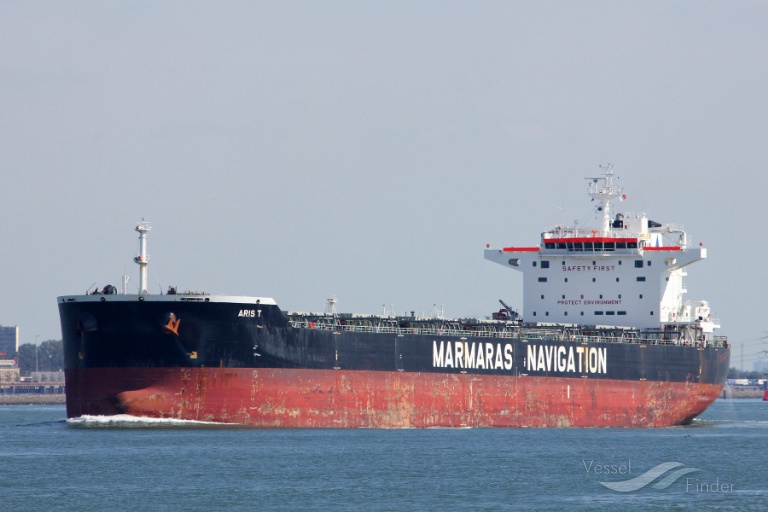 The issue in SCF Waxler Marine LLC v. Aris T MV was whether the excess insurers for a multi-vessel accident could enforce a “Crown Zellerbach clause,” and thus limit their liability to the value of the insured vessel. (The vessel at issue, the Aris T (right) is presently in the Atlantic en route to Rotterdam from Mobile.) The Fifth Circuit found that it lacked appellate jurisdiction over the district court’s ruling that the excess insurers could enforce such a clause: “The fundamentals of Bucher-Guyer bear a striking resemblance to this case. There, the district court determined the boundaries of a party’s liability— $500—based on the applicability of statutory language. Nevertheless, whether the opposing party was entitled to anything and, if so, how much was still to be determined. In this case, the court decided the boundaries of a party’s liability through determination of whether a contractual provision permitted them to do so. Whether Valero, Shell, and Motiva are legally permitted to recover anything from the Excess Insurers and, if so, how much remains to be determined.” No. 17-30805 (Oct. 30, 2018).
 William Pearson won a modest judgment in an overtime dispute and appealed in Pearson v. Frequency Car Audio, seeking more. The Fifth Circuit affirmed; as to a challenge to the accuracy of the employer’s records, it observed:
“[T]he question before the district court was not whether Frequency kept proper records—it was whether Pearson worked overtime. And although the district court noted that Frequency’s books were “incomplete and not in evidence,” its conclusion that Pearson did not work overtime was based on its findings that: (1) Pearson’s claim that his work at Khalsa’s and Singh’s residences constituted work for Frequency was “incredible”; (2) Khalsa’s testimony that Pearson worked no overtime was credible; and (3) Pearson’s claim that he worked on cars before the shop opened was “unquantifiable.” Thus, the district court’s conclusion was largely based on the witnesses’ credibility, so we must give that conclusion due regard.”
No. 17-20769 (Nov. 2, 2018, unpublished) (emphasis added).
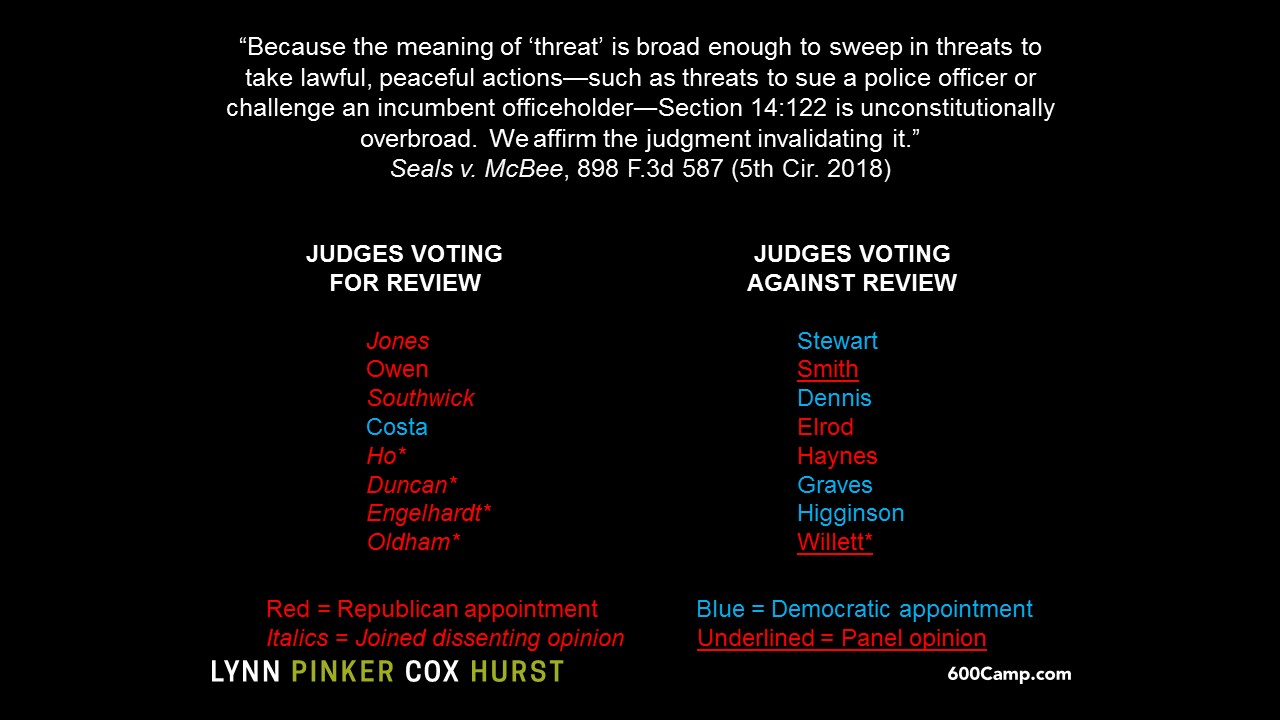 A Fifth Circuit panel struck down a Louisiana criminal statute about “threats” in Seals v. McBee, which led to an 8-8 vote and denial of en banc review. The full breakdown appears in the chart to the right; again, the new appointments by President Trump brought a case to the cusp of en banc review that likely would not have gotten so far before. No. 17-30667 (Oct. 31, 2018). A dissent from the denial of en banc review, joined by 4 of the 5 Trump appointees, would have dismissed the case on standing grounds. (The chart has been corrected from the original post, which misidentified Judge Dennis as a Republican appointee.)
A freak accident involving a compound bow killed Dr. Alan Sandifer, which led to litigation, which led to the plaintiff’s expert testifying as follows:
Dr. Kelkar conceded that from a biomechanical perspective, it was just as likely that Dr. Sandifer was killed by volitionally placing his head inside the bow as it was by an accidental twisting of the bowstring. But he added that he believed the second scenario was more likely because of statements from Dr. Sandifer’s friends and family describing him as a careful bow hunter and the difficulty of volitionally placing one’s head into a drawn bowstring. When pressed, Dr. Kelkar conceded that, without the statements about Dr. Sandifer’s careful nature as a hunter, he could not say his theory was more likely than the expert opinion offered by Hoyt.
This reliance on “propensity” evidence led to affirmance of the expert’s exclusion under Daubert: “Apart from exceeding the scope of his qualification as a biomechanical expert, the propensity evidence Dr. Kelkar based his opinion upon is not a reliable basis to draw a conclusion regarding Dr. Sandifer’s use of the bow at the time of the accident. The propensity evidence was offered by witnesses who testified that Dr. Sandifer was safety-conscious in using and handling the bow as a hunter and when hunting. Dr. Sandifer was not hunting when the accident occurred; he was in his home office and he was engaged in modifying his bow.” Sandifer v. Hoyt Archery Inc., No. 17-30124 (Oct. 24, 2018).
 The high-profile litigation about use of Dallas’s convention center by “Exxxotica,” which bills itself as “The Largest Adult Event in the USA Dedicated to Love & Sex,” was brought back to life by a divided Fifth Circuit panel in Three Expo Events LLC v. City of Dallas, No. 17-10632 (Oct. 24, 2018). The issue was standing; two judges agreed that the named plaintiff had alleged a direct injury, with one writing a detailed opinion and the other concurring in the result. A dissent would have affirmed, agreeing with the district court’s distinction between the entity that sued and the entity that would have operated the event in question.
In a win for our firm’s client, the Fifth Circuit affirmed last year’s $3 million trial win by Mike Lynn and John Volney for Prince Mansour bin Abdullah Al-Saud, in a succinct opinion touching on the parol evidence rule, speculative damages, and ways to cure a pleading problem with respect to the recovery of attorneys’ fees. Al-Saud v. Youtoo Media, No. 17-10622 (Oct. 22, 2018).
 The Fifth Circuit reversed a defense summary judgment in a trade secrets dispute in Brand Services LLC v. Irex Corp., noting inter alia –
- Discovery. In its summary judgment analysis, the district court should have addressed a discovery motion filed by the non-movant: “Brand Services claims it moved to compel immediately after discovering the responsive documents in the Pennsylvania litigation. There is some indication that Brand Services could not have reasonably discovered these documents sooner: Irex’s initial blanket objections to Brand Services’s discovery request were grossly improper, and thereafter Irex did little to comply with Brand Services’s requests. Therefore, Brand Services was arguably diligent in seeking these documents even though it did not discover them until after the discovery deadline had passed. At a minimum, Irex’s conduct in this discovery proceeding is highly questionable and bears further examination in light of the exemplar documents.”
- Damages. “Although Brand Services provided little in the way of detail about its claim that it spent ‘millions’ to design the software allegedly stolen, it has, at a minimum, provided some evidence from which a jury could reasonably estimate unjust enrichment damages. For example, it demonstrated that Irex’s use of the
allegedly stolen information saved Irex at least two to three days a month in time spent invoicing. Even assuming that Irex’s administrative personnel worked only an eight-hour day for minimum wage during those two to three days saved, this is a reasonable inference of unjust-enrichment damages.”
No. 17-30660 (revised Nov. 21, 2018).
A defendant adjusted its arguments about appropriate overtime calculation in light of the trial court’s rulings; the Fifth Circuit found no invited error, waiver, or judicial estoppel. As to judicial estoppel in particular, the Court observed: “In arguing for the comparator model, Saybolt never conceded that the FWW plaintiffs were paid based on a 40-hour workweek or were owed overtime at one and one-half times the “regular rate.” There was thus no inconsistency. Nor did the district court accept Saybolt’s initial position as is required for judicial estoppel. Indeed, the court rejected the comparator model by requiring that incentive payments be included in the “regular rate” calculation. This is why Saybolt fell back on the alternative argument that, since incentive payments must be included, the FWW method should be used to calculate the plaintiffs’ damages.” Dacar v. Saybolt LP. No. 16-20751 (Oct. 18, 2018). A brief opinion on rehearing clarified the scope of the opinion.
 Even in the complex world of the modern administrative state, the Social Security Administration stands alone as “the Mount Everest of bureaucratic structures.” Barrett v. Berryhill, No. 17-41177 (revised Oct. 16, 2018) (citation omitted). Surveying that landscape, the Fifth Circuit concluded that a person claiming disability benefits did not have an automatic right to cross-examine a “medical consultant,” a doctor who reviews records without examining the claimant: “We do not mean to say that the opinions of medical consultants are unimportant or error free. But granting an automatic right to subpoena them is too strong a medicine. We do not see why examination of a medical consultant will always, or even usually, lead to meaningful impeachment. That is especially true when, as in this case, the [relevant] form is reviewed by a second medical consultant, lessening the risk of error. When a claimant has legitimate concerns that a[] . . . form is inaccurate or misleading, existing regulations provide the opportunity to question the drafter.” (emphasis in original).
I n Seeligson v. Devon Energy, the Fifth Circuit made a good, and a not-good, finding for a putative class of mineral-interest holders.
- Good: The Court found that a putative class had established commonality as to the question whether the defendant “breached its implied duty to market by basing its price on a higher processing fee than the fee that a ‘reasonably prudent operator would have received at the wellhead,’ reasoning that “[t]his issue is precisely the type of common question ‘that . . . will resolve an issue that is central to the validity of each one of the claims in one stroke.'”
- Not good: “Despite the potential for individual questions based on [Defendant’s] statute of limitations defense, the district court did not mention the role, if any, the tolling or limitations issues would play in this class action litigation,” and remanded for analysis of whether the common questions would predominate over individual issues raised by these defenses.
No. 17-10320 (Oct. 16, 2018).
 “The district court also abused its discretion in excluding Sharma’s testimony regarding his trend analyses. The district court found this testimony misleading because Sharma only plotted some of the data points from the testing of the pond, which indicated a steady decline moving away from Fairway View, but some of the omitted data points were inconsistent with this trend. We find that this critique of Sharma’s method does not justify excluding the trend analysis testimony entirely. Rather, this question as to the basis for Sharma’s opinion is fodder for cross-examination, “affect[s] the weight to be assigned that opinion rather than its admissibility[,] and should be left for the jury’s consideration.'” Cedar Lodge Plantation v. CSHV Fairway View I, LLC, No.. 17-30742 (Oct. 10, 2018, unpublished) (emphasis added).
 The plaintiff in SureShot Golf Ventures, Inc. v. Topgolf Int’l, Inc. alleged that the defendant engaged in anticompetitive conduct by acquiring a company that made critical technology for its golf-related entertainment facilities. The Fifth Circuit affirmed dismissal on the ground that the case was not ripe: “[A]l of the allegations SureShot identifies for us are phrased in future terms, and SureShot has not alleged that any of the federal antitrust violations have resulted in the above-referenced feared actions.” No 17-20607 (Oct. 9, 2018, unpublished) (per curiam). (The district court’s opinion also dismissed for lack of antitrust injury, a point that the Fifth Circuit did not reach.)
 In Kiewit Offshore v. Dresser-Rand, the Fifth Circuit affirmed a summary judgment for the plaintiff in a large construction matter; as the final point addressed, the Court observed: “Dresser-Rand contends, for the first time on appeal, that Kiewit submitted insufficient, conclusory summaries of the work reflected in Invoices DR-04b, 05, and 06, preventing the district court from verifying the total amount of damages Kiewit claimed. Dresser-Rand failed to raise this argument below, and we therefore decline to consider it here.” The Court also noted that “it was undisputed that the invoices accurately reflected actual costs incurred . . . for work performed and accepted . . . .” It is a fair question whether the same result would obtain under Texas state practice, which among other matters distinguishes between “substantive” and “form” objections to summary judgment affidavits – “form” issues requiring objection, but not substantive ones. See Seim v. Allstate Texas Lloyds, No. 17-0488, 2018 WL 3189568, at *3 (Tex. June 29, 2018) (per curiam).
 The modern administrative state often requests documents for compliance and enforcement purposes; such a request led to a Fourth Amendment challenge to a subpoena from the Texas Medical Board in Barry v. Freshour. The challenge was made by a doctor who practiced at the facility that received the request. The Fifth Circuit rejected the doctor’s challenge and reversed the district court’s ruling in his favor: “The district court concluded Barry had standing because the records were sought in a proceeding against him and the subpoena was addressed to him personally (though it was also addressed to the records custodian). But the Supreme Court has rejected a ‘target’ approach to Fourth Amendment standing that would look to whether the evidence obtained could be used against the person seeking to challenge the search.” Here, “Barry relies on a list of pure privacy interests in the information the records contain. All but one, as he concedes, are specifically tied to his patients’ privacy interests in their own medical records. To the extent such interests are constitutionally cognizable, they cannot be asserted by Barry.” No. 17-20726 (Oct. 4, 2018).
 A federal statute regulates towing vessels, defined as “a commercial vessel engaged in or intending to engage in the service of pulling, pushing, or hauling along side, or any combination of pulling, pushing, or hauling along side.” Shell Offshore v. Tesla Offshore LLC presented the novel question of whether pulling a “towfish” underwater, as part of an archaeological project, fell within this statute (after an unfortunate encounter not with undersea history, but with a Shell offshore drilling rig). The Fifth Circuit found the statute applicable, concluding that the statute’s language did not require the exclusion of academically-oriented activity, that the statute would not reach ordinary fishing activity because the was not “the service” of such vessels, and that applying the statute here would not produce an absurd result. No. 16-30528 (Oct. 5, 2018). (This analysis would correctly exclude a Hummer carrying a TOW missile (above), although that could be called “tow-ing”).
 Whole Foods admitted to mislabeling certain prepackaged foods, which in addition to other legal problems, drew a securities fraud claim. The Fifth Circuit affirmed the rejection of that claim, observing: “The relationship between the weights-and-measures fraud and the plaintiffs’ loss (the decline in the stock price) is causal; the relationship between the alleged securities fraud and the plaintiffs’ loss is spurious. Whole Foods’ overcharging caused (1) the alleged accounting problems and (2) the public-relations problems. The public-relations problems arguably led to slowed sales and the loss in stock price. But the accounting problems did not cause the public-relations problem, nor do the plaintiffs allege that the accounting problems caused a separate loss in stock price.” Employers’ Retirement System v. Whole Foods Market, No. 17-50840 (Oct. 3, 2018).
 The “concurrent-remedies doctrine” holds that “when the jurisdiction of the federal court is concurrent with that of law, or the suit is brought in aid of a legal right, equity will withhold its remedy if the legal right is barred by the local statute of limitations.” In Sierra Club v. Luminant Energy, that doctrine would have barred a private litigant’s claim for an injunction when a damages claim was time-barred – but it was held not to apply to a request for injunctive relief brought by the U.S. in its capacity as sovereign. On the merits of the request, the panel majority noted that “the statute of limitations that barred the legal relief [of damages] does not itself bar equitable relief unless it constitutes a penalty,” and left the question of whether the relief was in fact a penalty for the district court on remand. A dissent reasoned that “both of these so-called forms of injunctive relief are really just time-barred penalties in disguise,” would have affirmed dismissal of the entire case on limitations grounds, and avoided the issue about applying the concurrent-remedies doctrine to sovereigns. No. 17-10235 (Oct. 1, 2018).
 Griggs was ordered to arbitrate his dispute with Stream Energy. Griggs refused to do so. When asked by the district court for a status report, in an echo of Bartleby the Scrivener’s famous “I would prefer not to,” Griggs responded in relevant part:
“Griggs anticipated that this Court would have already dismiss[ed] this case for want of prosecution because this Court left him only an arbitration which he has not pursued. So, Griggs states the following for the Court’s consideration: 1. Griggs understands and appreciates this Court’s order compelling arbitration. Griggs believes that the Court cons[idered] all arguments before it ruled. 2. However, Griggs disagrees with this Court’s conclusion that this matter must go to arbitration. 3. Griggs will not pursue arbitration. 4. Griggs stands ready to litigate this case before this Court to a conclusion.”
The district court then dismissed the case without prejudice. After review of the various kinds of dismissals addressed by Fed. R. Civ. P. 41, the Fifth Circuit treated the dismissal order as one for “delay or contumacious conduct” under Rule 41(b) – and thus, declined to reach the merits of the arbitration ruling: “Griggs should not be permitted, through recalcitrance, to obtain the review of the arbitration clause that he was expressly denied in the district court, a review that Congress has foreclosed under the Federal Arbitration Act.” Griggs v. SGE Management LLC, No. 17-50655 (Sept. 27, 2018).
Problems with the h andling of a CJA criminal appeal led to imposition of sanctions by the district court; specifically: (1) removal from Fort Worth’s CJA panel; (2) a $750 fine; and (3) “12 hours of ethics courses at an accredited law school” within a specified period. The Fifth Circuit affirmed the imposition of sanctions and the first two specific sanctions, but set aside the third as not being “the least restrictive sanction necessary to deter the inappropriate behavior”: “To do this, [the attorney] would presumably need to take the LSAT, apply, and be admitted into a law school. He would then likely need to suspend his law practice—12 hours of classes would almost make Luttrell a fulltime student. And finally, even if he did all this, we are aware of no law school that even offers 12 hours of ethics courses in a single semester.” In re Luttrell, No. 17-10589 (Sept. 28, 2018, unpublished).
 In Porter v. Times Group, the plaintiff sued People Magazine and two journalists for defamation. The case was removed, and then remanded – one of the individual defendants died and the district court allowed joinder of the Louisiana citizen appointed as that defendant’s “succession representative” under Louisiana law, which destroyed diversity. The Fifth Circuit would not ordinarily have jurisdiction over a remand order because of 28 USC § 1447(d) (“An order remanding a case to the State court from which it was removed is not reviewable on appeal or otherwise . . . .”) People Magazine argued that the joinder decision was reviewable as a collateral order, and the Fifth Circuit disagreed, finding that it did not establish the third and fourth requirements for appeal of such an order (that the order be “effectively unreviewable on an appeal from final judgment” and “too important to be denied review”).
 The Fifth Circuit made a second discovery-related observation in September, in Norman v. Grove Cranes, a products-liability dispute about a safer alternative design for a crane. The trial judge did not allow the plaintiff’s expert to testify on that point; on appeal, the Fifth Circuit found no abuse of discretion. Plaintiff said the expert “Perkin was unable to form an opinion regarding safer alternative design because Grove failed to produce the documents requested, i.e., the ‘draft design drawings related to the prior design of the crane at issue and similar Grove cranes.’.” The district court disagreed, “pointing out that Norman knew at least 83 days prior to the close of discovery that Perkin needed additional documents to form his expert opinion on safer alternative design but failed to file a motion to compel until a month after the close of discovery,” and noting that the plaintiff’s “failure to seek Court intervention via a motion to compel before the end of discovery shows a lack of diligence in seeking documents [he] now claims are indispensable to his expert’s ability to render a required opinion.” No. 17-20631 (Sept. 10, 2018, unpublished).
 The death of the racehorse “Rawhide Canyon” led to hard-fought litigation. The district court denied the plaintiff’s motion to voluntarily dismiss under Fed. R. Civ. P. 41(a)(1), and the Fifth Circuit found an abuse of discretion in not granting it: “Because the payment of attorneys’ fees was the sole basis for the district court’s denial of voluntary dismissal and Plaintiffs subsequently made clear that they would pay these fees, the district court abused its discretion by denying Plaintiffs the ability to voluntarily dismiss their own case.” No. 17-10569 (Sept. 10, 2018, unpublished).
 As neither interlocutory appeals about discovery nor discovery-related mandamus petition produce many Fifth Circuit opinions, a comment about discovery is notable when it is made. In National Urban League v. Urban League of Greater Dallas, as part of a summary judgment appeal, the appellant raised an issue about quashing a 30-b-6 deposition of Edward Smith. The Fifth Circuit found no abuse of discretion in denying a motion to quash when: “Defendant provided no explanation for why Smith could not arrange his travel plans to attend the deposition, given that he had ample notice of it, the funeral was the day before the deposition, and Plaintiff agreed to delay the deposition from the morning until the afternoon to allow for travel. Defendant also did not explain why it waited to object to the Rule 30(b)(6) topics until two days before the deposition was to occur.” No. 17-11469 (Sept. 20, 2018).
 The en banc case of Alvarez v. City of Brownsville involved a difficult question about municipal liability, under 42 U.S.C § 1983, for an alleged Brady violation arising during the plea bargaining process. The plaintiff had won a $2.3 million judgment after a jury trial. The majority opinion found inadequate evidence of deliberate indifference for § 1983 liability; as to the Brady issue, it held that “case law from the Supreme Court, this circuit, and other circuits does not affirmatively establish that a constitutional violation occurs when Brady material is not shared during the plea bargaining process.” From there, the sixteen judges that comprised this en banc panel authored six other opinions; this chart summarizes the authors and the joinders. No. 16-40772 (Sept. 18, 2018). It is unclear how that breakdown may carry over to commercial cases, but the opinions are revealing insights into a number of judges’ attitudes about structural and constitutional issues.
 This blog celebrates its birthday today; if you want to help celebrate, here’s a recipe for some New Orleans-style beignets.
 A standard form of an oil-and-gas project’s Joint Operating Agreement contains an attorneys’ fee provision that says: “In the event any party is required to bring legal proceedings to enforce any financial obligation of a party hereunder, the prevailing party in such action shall be entitled to recover . . . a reasonable attorney’s fee.” In Seismic Wells LLC v. Sinclair Oil & Gas Co., the Fifth Circuit found that this provision did not allow fee recovery as to a successful claim about a well damaged by a water leak. “Turning over operatorship rights and running the well on Seismic’s preferred erms are not financial obligations. Sinclair did not refuse to make some payment specified in the agreement.” (emphasis in original). No. 17-10500 (Sept. 13, 2018, unpublished).
 A recurring issue in litigation about injunctions and similar court orders is how much specificity is required. In In re: Jankovic, a judgment debtor complained about a contempt order requiring his production of tax returns. The specific language required him to:
“. . . do whatever is necessary, including but not limited to correct and proper authorizations, letters to the IRS Commissioner, letters to his Congressmen to help expedite the process, daily calls and visits to the Internal Revenue Services (IRS) headquarters, and anything else that he needs to do, to have the IRS provide to the plaintiffs directly all of the tax returns on file with the IRS for JAI and JAI Holdings from 2010 to the present or, if no tax returns are on file with the IRS, an official statement or documentation from the IRS proving that no tax returns exist for JAI and JAI Holdings for the tax years requested..”
The Fifth Circuit rejected his challenges, noting on this point: “Had the district court simply ordered Jankovic to ‘do whatever is necessary’ to obtain the returns from the IRS, we would have a more difficult question. However, we need not reach that question here because the district court specified particular actions, and Jankovic has not complied with those specific requirements.” No. 18-50720 (Sept. 13, 2018, unpublished).
 A retail business sold its defaulted accounts to a debt collector; litigation ensued about the retailer’s warranty in the sales contract that the accounts “have been originated, serviced, and collected in accordance with all applicable laws.” Conn Credit I LP v. TF Loanco III, LLC, No. 17-40148 (Sept. 10, 2018). This requirement created an “unambiguous condition precedent” when contained in a provision stating that the defendant was “obligated to transfer Accounts on a Closing Date only if . . . the representations and warranties of the Buyer or the Seller, respectively, in this Agreement are true and correct as of such Closing Date” (emphasis added). The Fifth Circuit declined to imply a prejudice requirement into the parties’ agreement, noting that “Conn does not identify a single Texas case applying a prejudice requirement outside of the insurance context” involving untimely claim notification.
 In Deutsche Bank v. Burke, an appeal after a remand in a mortgage dispute, the magistrate judge “proceeded to defy the mandate and contravene the law of the case doctrine by concluding that our prior opinion was clearly erroneous and that failure to correct the error would result in manifest injustice.” Unsurprisingly, the Fifth Circuit reversed, reviewing the basic principles about those doctrines, and observing that “the conduct here is extraordinary conduct that would lead to chaos if routinely done.” No. 18-20026 (Sept. 5, 2018).
After a thorough review of the “fundamental relationship between a relator and the Government in qui tam actions,” the Fifth Circuit concluded that private relators dismissal of an action with prejudice did not bind the non-intervening U.S. government: “[R]elators sought to abandon their claims because they no longer wished to participate in the litigation. In other words, they acted on purely private interests. The Government—even one that chooses not to intervene—should not be bound by this decision, powerless to vindicate the public’s interests in other actions that may have a stronger basis or a relator more able to shoulder the burdens of litigation.” U.S. ex rel. Vaughn v. United Biologics LLC, No. 17-20389 (Sept. 7, 2018).
 The Consumer Financial Protection Bureau – the subject of ongoing litigation about the constitutionality of its structure, which has been at issue in the recent Kavanaugh hearings – lost a challenge to a civil investigative demand in CFPB v. The Source for Public Data: “The CFPB did not comply with 12 U.S.C. § 5562(c)(2) when it issued this CID to Public Data. First, it did not state the ‘conduct constituting the alleged violation which is under investigation.’ According to its Notification of Purpose, the CFPB is investigating ‘unlawful acts and practices in connection with the provision or use of public records information.’ Simply put, this Notification of Purpose does not identify what conduct, it believes, constitutes an alleged violation. . . . Moreover, this CID does not identify ‘the provision of law applicable to such violation.’ As discussed, the CID never identifies an alleged violation, so it is unsurprising that it fails to identify a relevant provision of law.” No. 17-10732 (Sept. 6, 2018).
 In 2018, the Texas Supreme Court and the Fifth Circuit have taken different approaches to an important type of “Casteel” problem, in which a jury question has several legally viable theories, some of which are not supported with adequate evidence.
Federal. After a thorough (and infrequently-seen) summary of how federal law has developed on the “Casteel problem” of commingled liability theories, the Fifth Circuit concluded in Nester v. Textron, Inc., 888 F.3d 151 (5th Cir. 2018): “We will not reverse a verdict simply because the jury might have decided on a ground that was supported by insufficient evidence.” (applying, inter alia, Griffin v. United States, 502 U.S. 46 (1991)).
State. In Benge v. Williams, 548 S.W.3d 466 (Tex. 2018), a medical-malpractice case, the Texas Supreme Court observed: “The jury question in the present case, unlike the one in Casteel, did not include multiple theories, some valid and some invalid. It inquired about a single theory: negligence. But we have twice held that when the question allows a finding of liability based on evidence that cannot support recovery, the same presumption-of-harm rule must be applied.”
(Thanks to Mark Trachtenberg for pointing out this comparison at the recent Advanced Civil Appellate Course!)
 The plaintiff in Bloom v. Aftermath Public Adjusters, Inc. tried to overcome a limitations problem with the tolling doctrine for malpractice claims recognized by Hughes v. Mahaney & Higgins, 821 S.W.2d 154 (Tex. 1991). The plaintiff’s claim involved the conduct of a licensed public adjuster working for an insurance company; the Ffith Circuit characterized his argument as saying “that public adjusters are actually lawyers in disguise. Bloom concedes defendants are technically ‘non-lawyers,’ but he insists they effectively ‘provide[d] legal services,’ because there was once a time when Texas prohibited non-lawyers from engaging in public adjusting.” The Court was unpersuaded in this Erie case:
“But that was then, and this is now. Even assuming Texas law previously classified public adjusting as legal practice, under the relevant regime, these defendants are non-lawyers who were not engaged in legal practice. By definition, Bloom’s claims cannot implicate the unique relationship that triggers the bright-line rule from Hughes. Only Texas has the power to say where lawyer-ing ends and adjusting begins, just as its courts have the sole power to decide Hughes’s outer bounds.”
No. 17-41087 (Sept. 4, 2018).
 I commented today about the start of the Kavanaugh hearings on the morning show of Dallas’s Fox affiliate.
 Having just now seen Darkest Hour, the Academy Award-winning film about Churchill confronting Britain’s terrible military situation in May of 1940, I was inspired to update this blog’s page about legal writing with an essay written by Churchill as a young man called “The Scaffolding of Rhetoric.” It illustrates five simple ways to put words together to add power to the overall message they convey.
 The plaintiffs in Alaska Elec. Pension Fund v. Asar alleged securities fraud about the affairs of Hanger, Inc., the nation’s largest provider of orthotic and prosthetic patient care. The Fifth Circuit largely affirmed dismissal, but as to one defendant found adequate allegations of scienter based primarily on statements in an audit committee report, which “support the inference that McHenry shared the objectives of improperly enhancing Hanger’s financial results, or that he at least knew that others were doing so. A dissent would have also dismissed as to him, noting that “the complaint makes no effort to demonstrate which portions of the Report show that McHenry, or any other defendant, had the requisite scienter.” No. 17-50162 (Aug. 6, 2018).
 While cleaning ventilation equipment at the L’Auberge Casino in Lake Charles, Renwick fell from a defective ladder and later sued the property owner for his injuries. The Fifth Circuit reversed a summary judgment for the defense, noting “that it is th[e] combination of evidence–[Defendant’s] control of work-site access, its specific instructions about how to reach the vents, its rejection of an alternate access route, and the dispute over who provided the access ladder–that creates a jury issue on operational control.” (emphasis in original0 The Court reminded: “To be sure, a fact finder could ultimately reach a different conclusion. All we decide is that the evidence –viewed, as it must be, in the light most favorable to Renwick– would permit a reasonable trier of fact to resolve the operational control issue either way, and that the district court therefore erred in granting summary judgment.” Renwick v. PNK Lake Charles LLC, No. 17-30767 (Aug. 27, 2018).
OGA Charters entered bankruptcy after a tragic accident involving one of its buses. Applying Louisiana World Exposition Inc. v. Fed. Ins. Co., 832 F.2d 1391 (5th Cir. 1987), and Houston v. Edgeworth, 993 F.2d 51 (5th Cir. 1993), the Fifth Circuit held: “We now make official what our cases have long contemplated: In the ‘limited circumstances,’ as here, where a siege of tort claimants threaten the debtor’s estate over and above the policy limits, we classify the proceeds as property of the estate. Here, over $400 million in related claims threaten the debtor’s estate over and above the $5 million policy limit, giving rise to an equitable interest of the debtor in having the proceeds applied to satisfy as much of those claims as possible.” Martinez v. OGA Charters LLC, No. 17-40920 (Aug. 24, 2018).
 Monty Python’s famous “Dead Parrot” sketch involved John Cleese and Michael Palin debating whether a dead bird sold by a pet store was, in fact, deceased. In that same spirit, the case of Alliance for Good Government v. Coalition for Better Government addressed whether the Coalition’s bird-based logo infringed the Alliance’s logo:

Alliance won in the trial court, as the birds appear identical, “with the same down-pointed beak, gazing over the same wing (the right), sporting the same number of feathers (forty-three).” Unphased, Coalition argued that its bird was a hawk, while Alliance’s was an eagle, leading to a puzzled exchange with the district judge:
DISTRICT COURT: They look exactly alike to me, the two birds.
COUNSEL: […] [N]o, they really aren’t, your Honor, if you look at the wing span. The wing span of the eagle is different from the hawk. It’s much larger and it fans out, and that’s just the way the hawk looks.
Equally puzzled, the Fifth Circuit affirmed: “To cut to the chase: Alliance and Coalition have the same logo.” No. 17-30859 (Aug. 22, 2018) (emphasis in original).
 IAS, an insurance claim-adjusting firm, acquired Buckley, another such firm. Litigation ensued after Buckley was unable to bring the business from a large client, QBE. The Fifth Circuit found that IAS stated a viable fraudulent-inducement claim under Fed. R. Civ. P. 9(b) as to “three alleged misrepresentations that it contends led it to enter into the asset purchase agreement: (1) Buckley’s statement that Buckley & Associates was QBE’s ‘number one’ vendor; (2) Buckley’s statement that Buckley & Associates’ revenue from QBE would continue to grow; and (3) the statement in § 2.3 of the purchase agreement that its execution would not ‘violate, conflict, [or] result in a breach of . . . any Contract . . . to which [Buckley & Associates] is a party.'” The Court’s analysis of the third factor is particularly informative, touching on recent Texas Supreme Court authority about waiver-of-reliance provisions (Italian Cowboy Partners v. Prudential Ins. Co., 341 S.W.3d 323 (Tex. 2011)) and “red flags” that can negate justifiable reliance. (JPMorgan Chase Bank v. Orca Assets GP, LLC, 546 S.W.3d 648 (Tex. 2018)). A dissent would not have found any of the representations fraudulent as pleaded. IAS Service Group v. Buckley & Assocs., No. 17-50105 (Aug. 17, 2018).
 The hard-fought litigation over Harris County’s bail policies returned to the Fifth Circuit after a limited remand on the scope and structure of proper injunctive relief. The Court granted a stay pending resolution of the merits; in particular, noting the effect of the appellate “mandate rule” on 3 parts of the revised injunction:
- “The original injunction contained the requirement that a hearing be held within 24 hours. Thus, the same issue of what to do with arrestees during the gap between arrest and hearing—be it 24 or 48 hours—was always at issue and could have been addressed during the initial proceedings. Remand is not the time to bring new issues that could have been raised initially. Thus, Section 7 plainly violates the mandate rule, and the Fourteen Judges are likely to succeed on the merits as to that section.” (emphasis added)
- “[The first appeal determined that 48 hours was sufficient under the Constitution.. . . [I]n the model injunction, the proposed remedy for failure to comply with that requirement was for the County to make weekly reports to the district court identifying any delays and to inform the detainees’ counsel or next of kin about the delays. . . . The district co
 urt was to monitor the situation for a pattern of violations and only then take possible corrective action. Anything broader than that remedy violates any reasonable reading of the mandate.” (emphasis added).

O’Donnell v. Goodhart, No. 18-20466 (Aug. 14, 2018).
 At the intersection of civil and criminal law, United States v. Gas Pipe reminds of the reach of the federal civil forfeiture: “Although ‘merely pooling tainted and untainted funds in an account does not, without more, render that account subject to forfeiture,’ untainted funds are forfeitable if a defendant commingled them with tainted funds ‘to disguise the nature and source of his scheme.’ Here, the Government alleged in its verified complaint that the defendant Claimants commingled tainted and untainted funds in the UBS accounts to conceal or disguise the tainted funds. Some commingled funds allegedly also secured a loan that financed the alleged spice scheme and which was repaid with criminal proceeds.” No. 17-10626 (Aug. 16, 2018) (citations omitted).
 Veritext, a national court reporting service, challenged restrictions on its pricing practices (volume discounts, etc.) imposed by the Louisiana Board of Examiners of Certified Shorthand Reporters. The Fifth Circuit rejected Veritext’s constitutional claims but found that it had stated a viable restraint-of-trade claim under the Sherman Act. The Board claimed Parker antitrust immunity as a state actor, which required it to show “two requirements: first that ‘the challenged restraint . . . be one clearly articulated and affirmatively expressed as state policy,’ and second that ‘the policy . . . be actively supervised by the State.’” The Board satisfied the first, as its regulations were clear (thus creating the alleged restraint of trade in the first
 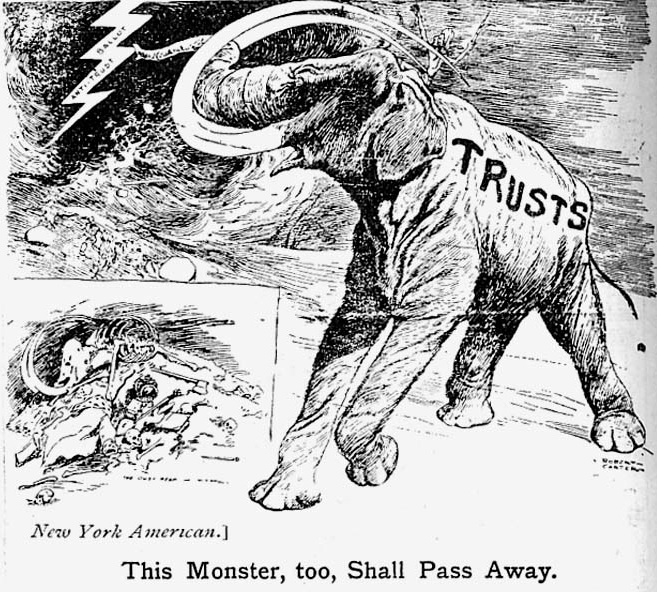 place), but failed the second: “Nothing in the record indicates that elected or appointed officials oversaw or reviewed the Board’s decisions or modified the Board’s enforcement priorities. And the Board’s argument on this point—that the legislature can amend the law in this area or veto proposed rules under Louisiana’s Administrative Procedure Act—is unconvincing. State legislatures always possess the power to change the law.” Veritext Corp. v. Bonin, No. 17-30691 (Aug. 17, 2018) (applying State Board of Dental Examiners v. FTC, 135 S.Ct. 1101 (2015)).
Fou r of my LPCH partners and I were recently named to “Best Lawyers in America” for 2019!
 An expert’s analysis of an electrical fire on a boat involved a “‘hose test,’ in which he directed water from a garden hose onto the boat’s wet bar and tracked where the water ended up.” Unfortunately for him, because this work was “meant to be a simulation or re-creation of what actually happened, it must be performed under ‘substantially similar conditions'” to the fire, and it was not: “Plaisance’s videos did not contain important information about how he conducted the experiment, such as ‘how long the hose ha[d] been running’ or ‘the pressure of the water coming out of the hose.’ Moreover, the video showed ‘a continuous stream of water from a garden hose directly at the junction between the back of the wet bar and the boat’s wall,’ and there was no indication that Gonzalez ever used a hose in that fashion. In fact, as the district court noted, Plaisance did not provide any information about how Gonzalez typically washed the boat.” Similar problems also undermined another expert’s testimony about electrical issues on the boat. Atlantic Specialty Insurance Co. v. Porter, Inc., No. 16-31259 (Aug. 6, 2018).
 Federal crop insurance “protects an asset that does not yet exist,” since future crops are not yet grown. Congress refined the applicable statutes in 2014, allowing farmers to “elect to exclude” certain low-production years from the historical calculations needed to write insurance for future crop production. The relevant amendment applied “for any of the 2001 and subsequent crop years,” and became effective immediately. A dispute arose between Texas winter wheat farmers, who announced their intention to exclude years under this statute, and the Federal Crop Insurance Corporation, who said it lacked time to prepare the necessary data. The Fifth Circuit rejected the FCIC’s argument that this statute’s “effective” date was distinct from its “implementation” date, finding that it failed step one of Chevron – “Such a problem arises not from an ambiguous
  text but from Congress implementing razor sharp deadlines without, at least according to the FCIC, sufficient resources. That does not give the FCIC authority to disregard the plain text of the statute . . . .” Adkins v. Silverman, No. 17-10759 (Aug. 7, 2018).
 The parties settled and filed an unconditional stipulation of dismissal under Fed. R Civ. P. 41(a)(1)(A)(ii). Months later, one of them sought to reopen that action and rescind the settlement, alleging forgery of a key signature. The Fifth Circuit found that “ancillary jurisdiction” was not available, as that doctrine is limited to (1) “factually interdependent claims” (which “disappear[] . . . after the original federal dispute is dismissed,” or (2) “‘collateral issues’ . . . things like fees, costs, contempt, and sanctions,” which could apply to an appropriate order but not to this type of unconditional dismissal. The Court found jurisdiction under Fed. R. Civ. P. 60(b)(1), which addresses “mistake, inadvertence, surprise, or excusable neglect,” but was of little help here where the settlement documents expressly allocated risk about later-discovered evidence. Other parts of that rule did not apply. “By unconditionally dismissing this action under Rule 41(a)(1)(A)(ii), the parties divested the district court of subject-matter jurisdiction over their dispute. To reopen this case, Scott must lean on Rule 60(b). But that rule’s six doors remain closed.” National City Golf Finance v. Scott, No. 17-60283 (Aug. 9, 2018).
 Problems in the construction of the Zapata County courthouse (right) led to litigation between S&P (the general contractor), and its subcontractors, as well as between S&P and its insurer. The insurer and S&P disputed S&P’s allocation of the proceeds from settlements with the subcontractors, and the Fifth Circuit affirmed judgment for the insurer: “S&P bears the burden to show that the subcontractor settlement proceeds were properly allocated to either covered or noncovered damages. If S&P cannot meet that burden, under the [two controlling cases], then we must assume that all of the settlement proceeds went first to satisfy the covered damages under U.S. Fire’s policy.” Satterfield & Pontikes Constr. v. U.S. Fire Ins. Co., No. 17-20513 (Aug. 2, 2018).
 The district court dismissed fraud claims against an accounting firm for not complying with a Louisiana pre-suit review requirement. The Fifth Circuit affirmed but remanded for clarification as to whether the dismissal was with, or without, prejudice. Fed. R. Civ. P. 41 generally assumes that silence means “with prejudice,” but the Supreme Court has recognized that that rule’s exception for “jurisdiction” goes so far as “encompassing those dismissals which are based on a plaintiff’s failure to comply with a precondition requisite to the Court’s going forward to determine the merits of his substantive claim.”
Firefighters’ Retirement System v. EisenerAmper LLP, No. 17-30273 (Aug. 2, 2018).
 “Aetna’s reliance on any alleged misrepresentation by NCMC was not justifiable. Almost immediately after NCMC notified Aetna of its prompt pay discount, Aetna began investigating. Its investigation revealed NCMC’s billing practices. Yet Aetna continued to pay claims marked with the prompt pay discount moniker.” In support, the Fifth Circuit cited the recent and influential case of JPMorgan Chase v. Orca Assets, 546 S.W.3d 648 (Tex. 2018), and “promoted” the unpublished case of Highland Crusader Offshore Partners v. LifeCare Holdings, 377 F. App’x 422 (5th Cir. 2010), observing: “The panel recognizes that Highland Crusader is unpublished, and therefore not precedential, but we cite it here to show consistency throughout our case law.” North Cypress Medical Center v. Aetna, No. 16-20674 (July 31, 2018).
John Williams was seriously injured in a 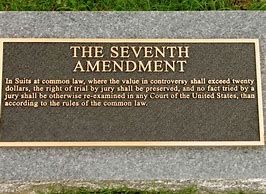 crane accident; a jury found that the crane manufacturer “failed to warn Model 16000 Series crane operators that, if the crane tips over, large weights stacked on the rear of the crane can slide forward and strike the operator’s cab.” The Fifth Circuit affirmed that multi-million dollar verdict, finding that the jury acted within its authority as to (1) liability for failure to warn, (2) proximate cause and alleged misuse by Williams, (3) proximate cause and an alleged alternative warning (left),
 (4) a Daubert challenge to the plaintiff’s expert on warnings (applying Roman v. Western Manufacturing, 691 F.3d 686 (5th Cir. 2012), and Huss v. Gayden, 571 F.3d 443 (5th Cir. 2009) – two powerful statements by the Court about admissible expert analysis), and (5) admissibility rulings about other accidents and the plaintiff’s prior conduct. The opinion provides a powerful illustration of a well-conducted trial by jury. Williamv v. Manitowoc Cranes LLC, No. 17-60458 (Aug. 3, 2018).
 Villareal sought to redeem five certificates of deposit purchased in the early 1980s. His primary legal theory, apparently selected to avoid problems with suing on the instruments themselves, was the quasi-contractual / restitution theory recognized in Texas law for “money had and received.” That theory ordinarily does not apply when an express contract (here, the CDs) addresses the subject. To escape that limitation, Villareal relied on Texas authority under which “an overpayment beyond what a contract provides may sometimes be recovered as unjust enrichment. If an overpayment qualifies as unjust enrichment, reasoned the district court, so should an underpayment.” (citation omitted, emphasis in original). The Fifth Circuit disagreed: “Overpayment typically falls outside a contract’s terms and, in that event, the contract would not ‘cover[] the subject matter of the parties’ dispute.’ By contrast, here the dispute involved the claimed non-payment of a debt evidenced by express contracts (the CDs). Unjust enrichment has no role to play.” (citation omitted, emphasis in original). Villareal v. Presidio Nat’l Bank (revised), No. 17-50765 (July 27, 2018, unpublished). (Picture above of Professor Samuel Williston eyeing some of his extensive work on express contracts).
 After trial of a Lanham Act claim involving the right to use the term “Cowboy” in advertising bourbon, the jury found abandonment of the plaintiff’s alleged mark, and the Fifth Circuit affirmed. “As the district court observed, the jury fairly rejected the testimony of Allied’s founder, Marci Palatella, and Allied’s price lists as evidence of intent to resume use. . . . Garrison Brothers presented evidence undermining Palatella’s contention that Allied specializes in old, rare, and expensive whiskeys; disputing Palatella’s reliance on a bourbon shortage as a reason for Allied’s failure to sell ‘COWBOY LITTLE BARREL’ bourbon after 2009; and highlighting Palatella’s inconsistent testimony concerning Allied’s price lists.” Allied Lomar, Inc. v. Lone Star Distillery LLC, No. 17-50148 (July 17, 2018, unpublished).
 In addition to inspiring 600Camp’s most painful pun of 2018, Ditech Financial LLC v. Naumann provides a thorough summary of the requirement – unique to default judgments, among all judgments available under the Federal Rules – that the relief awarded “must not differ in kind from, or exceed in amount, what is demanded in the pleadings.” As applied here, “Ditech’s demand for judicial foreclosure gave meaningful notice that, in the event of default, a writ of possession would issue in favor of the foreclosure-sale purchaser. Texas’s process of enforcing a judicial foreclosure—and specifically its mechanism for enforcing the foreclosure sale— entails issuance of the writ. Accordingly, in this case the judgment’s provision for future issuance of the writ did not expand or alter the kind or amount of relief prayed for by Ditech.” No. 17-50616 (July 19, 2018, unpublished).
An element of judicial estoppel is that “a court accepted the prior position” that is inconsistent with a party’s position in the case at hand. In Fornesa v. Fifth Third Mortgage Co., a bankruptcy debtor’s failure to amend his financial schedules satisfied that requirement, as “the bankruptcy court . . . implicitly accepted the representation by operating as though [Debtor’s] financial status were unchanged. ‘Had the court been aware . . . it may well have altered the plan.'” No. 17-20324 (July 27, 2018).
 The issue in Kirchner v. Deutsche Bank was whether a spouse’s signature on a deed of trust – but not the loan instrument – satisfied the Texas Constitution’s requirements about home equity loans. The Fifth Circuit found the issue was squarely addressed by a prior unpublished opinion, which it called “persuasive,” and affirmed – this time, in a published opinion. The broader principle is that unpublished opinions can work their way into published “status” when the issues they address are recurring ones. No. 17-50736 (July 11, 2018).
A practical tidbit about whether a notice of appeal is “jurisdictional” appeared during the last SCOTUS term in Hamer v. Neighborhood Housing Services: “Several Courts of Appeals, including the Court of Appeals in Hamer’s case, have tripped over our statement in Bowles [v. Russell, 551 U. S. 205, 210–213 (2007)], that “the taking of an appeal within the prescribed time is ‘mandatory and jurisdictional.’ The ‘mandatory and jurisdictional’ formulation is a characterization left over from days when we were ‘less than meticulous’ in our use of the term ‘jurisdictional.’ The statement was correct as applied in Bowles because, as the Court there explained, the time prescription at issue in Bowles was imposed by Congress. But ‘mandatory and jurisdictional’ is erroneous and confounding terminology where, as here, the relevant time prescription is absent from the U.S. Code. Because Rule 4(a)(5)(C), not § 2107, limits the length of the extension granted here, the time prescription is not jurisdictional.” No. 16-658 (Nov. 18, 2017) (citations and footnote omitted).
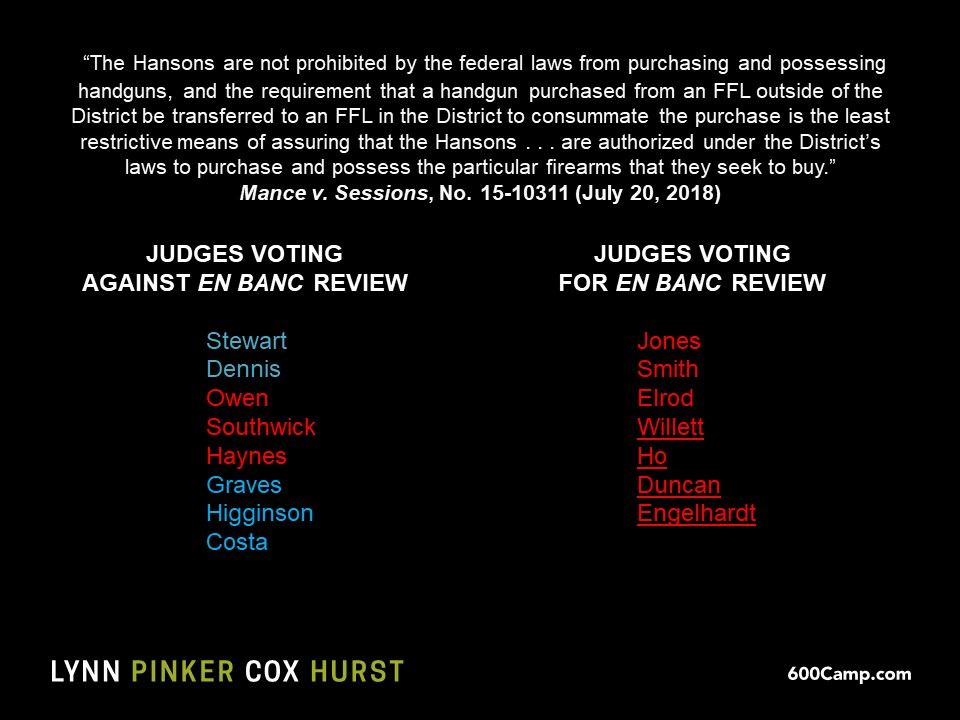 Rehearing motions led to a revised panel opinion and an en banc vote in Mance v. Sessions, a Constitutional challenge to restrictions on handgun sales by an authorized federally-licensed firearm dealer, to a purchaser who lives in a different state from the dealer. The revised opinion affirming the restrictions stood, with the Court voting 9-7 against rehearing en banc. Two of the three dissents from the vote were written by recent nominees of President Trump, with all of his nominees joining the vote in favor of review. Notably, this vote reflects two vacancies at the time it was conducted (one of which has since been filled with the confirmation of Judge Oldham, and other to be filled when a nomination is made to replace Judge Jolly of Mississippi). Assuming the two nominees would join the other new judges in their view of this case, their addition would be outcome-determinative as to its en banc review.
 The Senate has now confirmed Andrew Oldham of Texas as the newest judge on the Fifth Circuit. Congratulations and every best wish to Judge Oldham.
 A difficult question of administrative law produced a divided panel in Collins v. Mnuchin. The panel majority concluded that the Federal Housing Finance Agency (a regulator for Fannie Mae and Freddie Mac created by Congress in the wake of the 2008 financial crisis) was unconstitutionally structured. After careful review of the Supreme Court’s precedents in the area, the panel excised a “for cause” limitation on the removal of FHFA’s director from the relevant statute, finding that with this revision “the FHFA survives as a properly supervised executive agency.” One dissent took issue with that holding; another dissent criticized the majority’s conclusion that the specific FHFA action at issue – a “net worth sweep” requiring payment of substantial quarterly dividends to the Treasury by Fannie and Freddie – was within the scope of FHFA’s statutory authority and thus insulated from judicial review. No. 17-20364 (July 16, 2018).
 A succinct case study in bankruptcy standing appears in Furlough v. Cage: “Furlough’s primary contention is that, but for NOV’s proof of claim, Technicool’s assets would exceed its debt, and he would be entitled to any estate surplus. Because SBPC represents both NOV and the Trustee, Furlough argues, it might fail to disclose any problems with NOV’s claim, robbing him of the possibility of recovering a surplus. This speculative prospect of harm is far from a direct, adverse, pecuniary hit. Furlough must clear a higher standing hurdle: The order must burden his pocket before he burdens a docket.” No. 17-20603 (July 16, 2018) (emphasis added).
 An emotionally-charged lawsuit about the disposal of embryonic and fetal tissue led to an unfortunately-timed subpoena (during Holy Week) to the Texas Conference of Catholic Bishops, which in turn led to emergency appellate proceedings. The Fifth Circuit’s panel majority found the order was appealable as an interlocutory order notwithstanding Mohawk Indus. v. Carpenter, 558 U.S. 100 (2009), noting the importance of the First Amendment issues involved and that “Mohawk does not speak to the predicament of third parties, whose claims to reasonable protection from the courts have often been met with respect.” A dissenting opinion would not have accepted the interlocutory appeal, noting that mandamus was also available (although requiring a “clear and indisputable” right rather than simply a substantial question), and observing that the movants’ “failure to object to the in camera inspection [at issue] certainly forfeits an appellate challenge to it, and the affirmative act of producing the documents likely amounts to full-scale waiver.” Whole Woman’s Health v. Smith, No. 18-50484 (revised July 17, 2018).
Fisk Electric, a subcontractor, sued the general contractor and its surety under the Miller Act, a “federal statute that requires general contractors to secure payment to subcontractors on most federal construction projects.” Fisk claimed it was The dispute involved the inducement into of a settlement agreement; the specific issue on appeal was “whether the party alleging fraud must engage in active investigation to satisfy the standard of justifiable reliance.” In something of a counterpoint to recent Texas cases such as JP Morgan Chase v. Orca Assets, No. 15-0712 (Tex. March 23, 2018), the Court concluded that it was not, and Fisk was entitled to rely on the general contractor’s representations in these particular negotiations. Fisk Elec. Co. v. DQSI LLC, No. 17-30091 (June 29, 2018).
 In-N-Out attempted to keep its employees from wearing buttons in support of the”Fight for $15″ minimum wage campaign (right, approximately actual size). The NLRB found this was an unfair labor practice and the Fifth Circuit affirmed. Presumptively unreasonable under federal labor law, In-N-Out argued that the ban fell within a “special circumstances” exception for reasons of the company’s public image and food safety. Both arguments failed, in large part because the company required the wearing of significantly larger buttons during the Christmas season and a charitable fund drive each April. In-N-Out-Burger v. NLRB, No. 17-60241 (July 6, 2018).
 The plaintiffs in Firefighters’ Retirement System v. Grant Thornton LLP alleged that Grant Thornton waived its right to insist on presuit review of the claims by a review panel, as ordinarily required by Louisiana law. The Fifth Circuit rejected this argument, finding:
- Judicial estoppel did not apply to an allegedly inconsistent litigation position by Grant Thornton when the district court did not accept it (notably, stating the elements of the doctrine in a way that does not require the statement to have been made in a different proceeding), and
- Grant Thornton did not waive this requirement, distinguishing (and criticizing) a Louisiana appellate opinion on the issue, and noting that the litigation had been stayed for a lengthy period such that GT had not yet even filed an answer.
Accordingly, the court affirmed the dismissal of plaintiffs’ claims because of preemption. No. 17-30274 (July 3, 2018).
 Applying Singh v. RadioShack Corp., 882 F.3d 137 (5th Cir. 2018), which in turn relied upon Fifth Third Bancorp v. Dudenhoeffer, 134 S. Ct. 2459 (2014), the Fifth Circuit rejected a duty-of-prudence claim against an ERISA fiduciary based on the defendants allowing investments to continue a troubled company’s stock. Specifically, the plaintiffs alleged that the defendants “knew that it was inappropriate to rely on the market price of Idearc stock because their own fraudulent activities had caused the public markets to overvalue Idearc stock.” The Court did not agree: “[T]he alleged fraud is by definition not public information, and [Plaintiff] does not address how this information would affect the reliability of the market price ‘as an unbiased assessment of the security’s value in light of all public information.'” No. 16-11590 (June 27, 2018).
 Courtesy of the Huffington Post, here are seven good trivia questions about the Declaration of Independence to enjoy on your July 4 holiday.
The judgment creditor in Century Surety Co. v. Seidel, a case involving sexual assault on an underage restaurant employee, tried valiantly to collect from the restaurant’s insurance carrier. The Fifth Circuit found that the policy’s “criminal acts” exclusion precluded coverage, despite the plaintiff not specifically pleading that the underlying acts were criminal: “Appellants have cited no case law stating that, to trigger a criminal act exclusion, the plaintiff in the underlying suit must, in addition to describing actions that necessarily imply a crime, also specifically label those actions as criminal. Such a rule is incongruous with the plain language of the Policy and would create an artifice in criminal-act exclusions.” No. 17-10026 (June 25, 2018).