In T&W Holding Co. v. City of Kemah, the Fifth Circuit held that challenges to a municipal “zero-occupancy” order were ripe because the City had already taken a sufficiently final position by issuing the relevant notice, which immediately barred all use of the building.

Rejecting the district court’s view that a further City Council decision was required, the court emphasized that de facto finality exists where the government’s action leaves no doubt as to how the regulation applies to the property: “The City reached a sufficiently final position when the alleged taking occurred—specifically, when Shoaf issued the zero-occupancy notice,” and “[a]s soon as Shoaf posted the zero-occupancy notice, Plaintiffs lost all economic use of the building.” No.
24-40679; Nov. 21, 2025


Computer Sciences Corp. v. Tata Consultancy Services reformed a trade-secret injunction to better match the substantial damages that were also awarded. In particular, the Fifth Circuit held that where a plaintiff has already received unjust enrichment damages—calculated here as avoided development costs—the injunction cannot also bar the defendant’s future use of the technology it built during the misappropriation

The Court recognized two, related principles: (1) unjust enrichment damages are designed to strip the defendant of the benefit accrued from misappropriation and put the defendant in the position it would have occupied had it incurred those development costs lawfully; (2) an injunction cannot then deprive the defendant of the very fruits it has now effectively paid for, because that would be duplicative and punitive.

In other words, once the defendant has been compelled to pay the avoided costs, equity does not also forbid use of the resulting post-misappropriation implementation. Equity does, however, continue to forbid any possession, access, or use of the trade secrets themselves.

The Cout also required the injunction to be conformed to Federal Rule of Civil Procedure 65(d)(2), to clarify that the scope of the specific parties bound by the injunction was consistent with the terms of that rule. No. 24-10749; Nov. 21, 2025.

If you aren’t yet a member of the Bar Association of the Fifth Federal Circuit (or “BAFFC” to those in the know) you should join! Our gifted new executive director, Donna Cuneo, led the charge for this awesome new publication, “Following the Fifth” that has general news and also highlights the great work of Krystil Lawton and Walter Woodruff — here is the first edition!


Storey Mountain LLC v. JP Morgan Chase laments: “Despite the long line of cases requiring parties to establish the citizenship of an LLC’s members, this remains ‘an evergreen problem in our circuit.'”

The Court thus remanded for further development of the record about the parties’ citizenship, reminding that the following was not sufficient to establish diversity jurisdiction as to an LLC: “Storey Mountain LLC ‘is a limited liability company organized under the laws of Wyoming, with its principal place of business in Florida. For purposes of diversity, Garnishor is a citizen of Wyoming and Florida.” No. 24-20535 (Nov. 10, 2025).


The interlocutory appeal in Arnold v. Barbers Hill ISD arose from a challenge to a school district’s hair-code policy. The plaintiffs noticed depositions of the superintendent and a former board president to probe the Board’s reasons for adopting and enforcing the policy. The district asked the court to bar questions about lawmakers’ “subjective intentions, motivations, [and] thought processes” by invoking legislative privilege on their behalf.

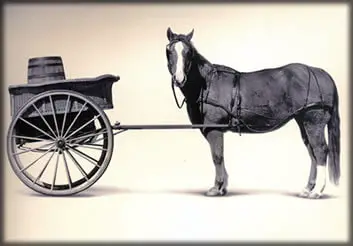
The Fifth Circuit held that legislative privilege is “personal to the legislator,” and observed that no individual privilege holder had actually invoked it or otherwise participated in the proceedings. Therefore, the governmental entity could not assert it on their behalf. As the Court concluded: “This case’s cart precedes its horse.” No. 23-20256, Nov. 3, 2025.

In Legendre v. Harrah’s Casino, the Fifth Circuit held that a genuine fact issue existed as to negligence, requiring reversal of a summary judgment, where surveillance footage and testimony allowed a reasonable inference of inattentive conduct by an employee.

A patron of Harrah’s Casino bumped into a casino employee on the casino floor. The record showed that  the employee admitted he “was walking while looking down fixing [his] facemask” and did not see the patron before impact.. A surveillance video, while brief, showed him not looking where he was going. As the Court summarized: “whether this momentary inattention amounts to negligence is a fact issue, which the district court should not have resolved.” No. 24-30689, Oct. 30, 2025.

Ackerman v. Arkema involved the rule of orderliness and a question of Texas limitations law about the tolling effect of a class-action filing. Anchoring its analysis in prior Circuit precedent, the panel majority said that, absent intervening state authority, it must adhere to earlier panel decisions predicting Texas law, because “a prior panel’s interpretation of state law has binding precedential effect on other panels of this court absent a subsequent state court decision or amendment rendering our prior decision clearly wrong.”

That said, the panel divided over whether to certify the tolling question to the Texas Supreme Court. The majority declined to do so, emphasizing that neither party pressed for it, that one side opposed it at argument while the other was tepid, and that the issue did not present a “close[] question” in light of Circuit precedent. The dissent would have certified. No. 25-20006, Oct. 31, 2025.

The arcane but still vital “strips and gores” doctrine of Texas property law appeared in Legacy Housing Corp. v. City of Horseshoe Bay, in which the Fifth Circuit held that doctrine did not award the developer ownership of a five-foot “greenbelt” strip, because the original grantor conveyed lots by express reference to a recorded plat that mapped each lot’s boundary and the contiguous greenbelt as separate. “Texas’s strips and gores doctrine does not apply to unambiguous conveyances unless the case involves a road or right of way,” and the greenbelt here was neither. No. 24-50462; Oct. 31, 2025.